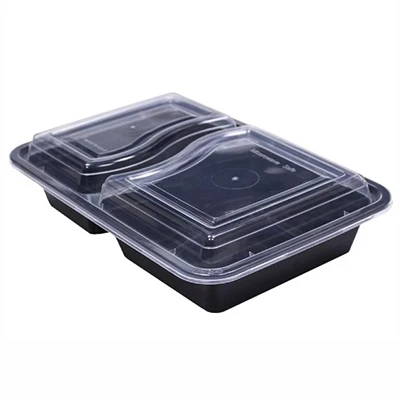
Choosing a packaging supplier is an important decision for food businesses because container quality can affect product protection, storage, transportation, and customer experience. A supplier that meets your requirements consistently can also make purchasing and production planning easier.
Before partnering with a plastic food container manufacturer, it is useful to ask detailed questions about materials, production capabilities, quality control, compliance, pricing, and delivery. LRpacking is one example of a manufacturer businesses may evaluate, but every supplier should be assessed according to the specific needs of the project.
What Materials Do You Use?
Start by asking which plastic materials the manufacturer offers and which are appropriate for your intended application. Common options include polypropylene (PP), PET, HDPE, and other specialized plastics.
The right material depends on factors such as the type of food, temperature exposure, required strength, transparency, and storage conditions. A knowledgeable supplier should be able to explain the differences rather than simply recommend the least expensive option.
Are Your Containers Suitable for Food Contact?
Food-contact suitability is a fundamental consideration when purchasing plastic packaging. Ask the manufacturer which regulations and standards its products are designed to meet.
Request relevant documentation for the specific material and container. Requirements can vary depending on the destination market, so documentation should be reviewed according to where and how the packaging will be used.
What Quality-Control Procedures Do You Follow?
Consistent quality is particularly important for businesses ordering large quantities. Ask how the manufacturer controls quality from raw material inspection through finished-product production.
Useful questions include:
- How are incoming materials inspected?
- What production parameters are monitored?
- How are container dimensions checked?
- How are defective products identified?
- What final inspections are performed?
Understanding these procedures can provide insight into how the manufacturer maintains consistency between production batches.
What Is Your Production Capacity?
A supplier needs sufficient capacity to handle your expected order volume. Ask about current production capabilities, available equipment, and typical production schedules.
If you anticipate business growth, discuss whether the manufacturer can increase output when required. This can help prevent the need to change suppliers when packaging demand increases.
What Are Your Minimum Order Quantities?
Minimum order quantities can have a major effect on purchasing and inventory management. Ask whether minimum quantities differ between standard and customized containers.
Consider whether the required quantity fits your storage capacity and actual packaging consumption. A large minimum order may not be practical if your business has limited warehouse space or variable demand.
Can You Provide Samples?
Always ask for samples before committing to a substantial order, especially when the container will be used for a new product.
Evaluate the sample for dimensions, lid fit, strength, appearance, stackability, and overall functionality. If the container will be exposed to specific temperatures or handling conditions, test it under realistic circumstances.
Do You Offer Custom Designs?
If standard packaging does not meet your requirements, ask whether the manufacturer provides custom container development.
Clarify what customization is available, such as:
- Container size and capacity
- Shape and dimensions
- Lid design
- Colors
- Surface finishes
- Branding or printing options
Also ask about tooling costs, mold ownership, minimum quantities, and development timelines before approving a custom design.
How Long Are Your Lead Times?
Lead time can affect production planning and inventory levels. Ask about typical lead times for samples, standard orders, and customized products.
It is also worth discussing how the manufacturer handles urgent orders, seasonal demand, or unexpected production delays. Clear expectations can make supply planning more predictable.
How Do You Handle Quality Problems?
Even established suppliers can occasionally encounter production issues. Ask what happens if containers arrive damaged, defective, or outside the agreed specifications.
A clear process for reporting defects, investigating causes, replacing products, or resolving disputes can reduce uncertainty after an order has been delivered.
Can You Maintain Consistent Specifications?
For recurring orders, consistency between batches is essential. Ask how the manufacturer records product specifications and ensures that future production matches approved samples.
Important specifications may include dimensions, weight, material, color, wall thickness, lid fit, and other agreed characteristics. Documenting these details can help reduce variations over time.
What Testing Do You Perform?
Different food containers may require different types of performance testing. Ask which tests are routinely performed and whether test reports are available.
Depending on the product, testing may cover dimensional accuracy, impact resistance, leakage, closure performance, temperature resistance, or other relevant characteristics.
What Are the Payment and Pricing Terms?
Request a detailed quotation rather than comparing only the unit price. Ask about tooling, packaging, shipping, minimum quantities, payment schedules, and any additional charges.
The total cost of packaging can include several factors beyond manufacturing. A transparent quotation makes it easier to understand the actual purchasing cost.
How Do You Package and Ship Finished Products?
Finished containers need to remain clean and undamaged during storage and transportation. Ask how products are packed, protected, stacked, and prepared for shipment.
For international orders, clarify shipping responsibilities, documentation, estimated transit times, and the arrangements used for handling larger shipments.
Do You Have Relevant Industry Experience?
Experience with similar food packaging applications can be useful because different products have different requirements.
Ask whether the manufacturer has produced containers for applications comparable to yours. However, experience should be considered alongside current equipment, quality systems, compliance documentation, and production capacity.
How Do You Support Long-Term Orders?
If you expect recurring purchases, discuss how the manufacturer manages repeat orders and changing demand.
Ask about production scheduling, material availability, inventory planning, communication procedures, and the process for introducing changes to an existing container specification.
Final Checklist Before Partnering
Before making a decision, make sure you have clear answers to the most important questions:
- Is the material suitable for the intended food application?
- Can the manufacturer provide relevant compliance documentation?
- Are quality-control procedures clearly defined?
- Can production capacity meet current and future demand?
- Are minimum order quantities practical?
- Can samples be tested before a large order?
- Are customization options available if needed?
- Are lead times and delivery arrangements clearly defined?
- Are pricing and additional costs transparent?
- Is there a clear process for handling quality issues?
Final Thoughts
Selecting a food packaging supplier should involve more than comparing product prices. Asking detailed questions about materials, food-contact requirements, manufacturing capacity, quality control, testing, customization, and delivery can reveal whether a manufacturer is suited to your specific requirements.
Taking time to evaluate these factors before entering a long-term partnership can help businesses establish clearer expectations and reduce potential packaging and supply issues in the future.