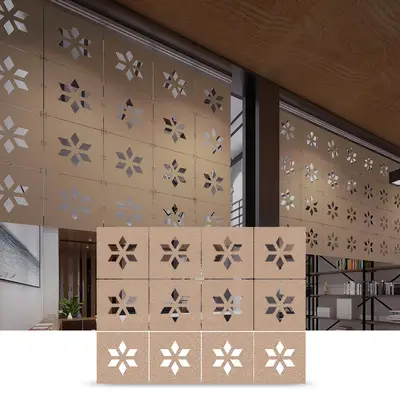
Acoustic panels play an important role in improving sound quality and controlling unwanted noise in offices, recording studios, educational institutions, restaurants, and other indoor environments. These products are designed to absorb sound reflections, reduce reverberation, and create more comfortable spaces for communication and concentration. Although finished panels may appear simple, their production involves several carefully managed stages, from material selection and processing to assembly and quality inspection.
Understanding what happens inside an Acoustic Panel Factory provides useful insight into how raw materials become functional acoustic products. Each manufacturing stage influences the panel’s appearance, durability, and sound absorption performance. Exploring this process also helps architects, contractors, interior designers, and business owners make more informed decisions when sourcing acoustic solutions.
1. Selecting and Preparing Raw Materials
Manufacturing begins with selecting materials that provide the required acoustic and physical properties. Different panel designs use different materials depending on their intended application, performance requirements, and appearance.
Common materials include:
- Polyester fiber: Frequently used in sound-absorbing panels because it is lightweight, versatile, and suitable for various shapes and finishes.
- Mineral wool: Used in many acoustic applications for its sound absorption and thermal insulation properties.
- Fiberglass: A material commonly incorporated into acoustic products where effective sound absorption is required.
- Fabric coverings: Used to create attractive panel surfaces while allowing sound to pass through to the absorbing core.
- Wood and composite materials: Often used for decorative acoustic products, including panels with perforated or slatted surfaces.
Before production, materials are inspected to check their condition, consistency, dimensions, and suitability for the intended product. Proper preparation helps reduce manufacturing defects and supports consistent results.
2. Processing Materials into Panel Components
Once the raw materials have been selected, they are processed into components that form the acoustic panel. The exact methods depend on the material and product design.
Fiber-based materials may undergo cutting, compression, bonding, or molding to achieve the required thickness and density. Mineral wool and fiberglass products are prepared according to their specified dimensions, while wood-based panels may require sawing, drilling, perforation, or surface finishing.
Accuracy is important during this stage. Incorrect dimensions or inconsistent material thickness can affect how panels fit together and may influence their acoustic performance.
Manufacturers use appropriate machinery and production techniques to maintain uniformity while preparing components for assembly.
3. Cutting and Shaping the Panels
After material processing, components are cut into the required sizes and shapes. Standard rectangular panels are common, but many projects require customized dimensions or decorative forms.
Depending on the product, manufacturers may use precision cutting equipment, CNC machinery, or specialized shaping tools. These processes help create consistent edges and accurate dimensions.
Custom shaping is especially useful for projects involving:
- Wall-mounted acoustic treatments.
- Ceiling sound absorption systems.
- Decorative geometric panels.
- Curved or specially designed acoustic features.
- Panels fitted around architectural elements.
Careful cutting ensures that the components match the approved design and are ready for the next production stage.
4. Assembling the Acoustic Panel Structure
Assembly brings the prepared components together to create the finished panel structure. Depending on the design, this may involve combining an acoustic core with a frame, backing material, adhesive, or decorative surface.
For fabric-wrapped panels, the covering is carefully positioned and secured around the absorbing core. Wood-based products may require additional structural components, surface treatments, or mounting arrangements.
The assembly process must balance appearance with functionality. Fabric should remain properly tensioned, edges should be neat, and components should be securely attached.
Manufacturers also need to consider how the finished panel will be mounted. Wall and ceiling applications may require different backing systems or installation accessories.
5. Applying Surface Finishes and Decorative Details
The visible surface of an acoustic panel influences how well it fits into an interior design scheme. Modern acoustic products are available in a variety of colors, textures, patterns, and finishes.
Fabric-covered panels may use different textile options to complement furniture, wall finishes, and corporate branding. Wooden acoustic panels can feature natural veneers, decorative laminates, perforations, or slatted designs.
Surface finishing should not compromise the intended acoustic function. For example, fabric coverings generally need to allow sound to reach the absorbing material underneath.
Attention to finishing details helps create products that combine practical acoustic benefits with attractive visual presentation.
6. Conducting Quality Control Inspections
Quality control is an essential part of acoustic panel manufacturing. Before products are approved for packaging, they should be inspected to ensure that they meet the required specifications.
Typical inspection points include:
- Dimensions: Checking panel length, width, and thickness.
- Surface quality: Looking for scratches, stains, wrinkles, or visible defects.
- Structural integrity: Confirming that components are securely assembled.
- Material consistency: Checking for variations that could affect product quality.
- Appearance: Verifying colors, patterns, edges, and finishing details.
- Acoustic performance: Testing products against relevant sound absorption requirements where applicable.
Acoustic performance is often assessed through standardized laboratory testing. The results may be expressed using metrics such as the Noise Reduction Coefficient (NRC) or sound absorption coefficients across different frequencies.
These measurements help buyers understand how a product performs under specified test conditions. They should be reviewed alongside installation details because the actual acoustic results in a room depend on factors such as coverage area, placement, room dimensions, and surface materials.
7. Packaging and Preparing Products for Delivery
Once inspection is complete, finished panels are prepared for transportation. Proper packaging is important because acoustic products may be vulnerable to scratches, dents, moisture, or deformation during handling.
Manufacturers select packaging methods based on the panel’s size, material, weight, and fragility. Protective wrapping, corner guards, cartons, and suitable pallet arrangements can help reduce the risk of damage.
For large commercial projects, packaging and labeling also support organized delivery. Identifying product types, dimensions, colors, and installation locations can make it easier for contractors to manage materials when they arrive on-site.
8. Managing Custom Orders and Large Projects
Not every acoustic project uses standard products. Offices, educational facilities, recording studios, hotels, and commercial buildings may require panels designed around specific acoustic and architectural requirements.
Custom manufacturing can involve adjustments to:
- Panel dimensions and thickness.
- Acoustic core materials.
- Fabric colors and surface finishes.
- Shapes and decorative patterns.
- Mounting systems.
- Quantity and packaging arrangements.
For large orders, manufacturers need to coordinate material availability, production scheduling, quality checks, and delivery requirements. Clear communication between the customer, designer, and manufacturer helps ensure that the finished products meet the project’s specifications.
9. The Role of Technology in Modern Acoustic Manufacturing
Technology has improved the accuracy and efficiency of acoustic panel production. Computer-aided design software helps manufacturers develop detailed product drawings, while CNC equipment supports precise cutting and shaping.
Automated machinery can also improve consistency when producing large quantities of components. Digital production planning helps coordinate manufacturing schedules and manage materials more efficiently.
At the same time, quality testing and improved material development allow manufacturers to create products for increasingly varied applications. These developments support greater design flexibility while helping maintain consistent production standards.
10. What Buyers Should Look for in an Acoustic Panel Manufacturer
Understanding the manufacturing process can help buyers evaluate suppliers more effectively. A professional manufacturer should be able to explain its materials, production methods, quality procedures, and available customization options.
Before placing an order, consider the following:
- Material information: Does the manufacturer clearly identify the materials used in its panels?
- Acoustic test data: Are relevant performance reports or technical specifications available?
- Customization capabilities: Can the manufacturer accommodate project-specific sizes, finishes, and designs?
- Production consistency: Does the company follow quality checks throughout manufacturing?
- Installation guidance: Are mounting recommendations and technical details provided?
- Delivery arrangements: Can the supplier explain packaging methods and estimated lead times?
- Project experience: Does the manufacturer have experience producing panels for similar environments?
Reviewing these details helps buyers distinguish between products that simply look attractive and those that meet practical acoustic requirements.
Conclusion
The journey from raw materials to finished acoustic panels involves several important stages, including material selection, processing, cutting, assembly, surface finishing, quality inspection, and packaging. Each stage contributes to the final product’s appearance, structural reliability, and sound absorption capabilities.
For buyers, understanding this manufacturing process makes it easier to assess product specifications and choose suitable solutions for different environments. By considering material quality, acoustic testing, customization options, and production standards, businesses and designers can invest in acoustic panels that support both functional performance and attractive interior spaces.