Choosing the right irrigation pipes is essential for maintaining efficient water distribution in agricultural fields, gardens, orchards, and commercial farming operations. Drip and sprinkler systems have different water delivery methods, pressure requirements, and installation needs, so selecting suitable pipes can influence irrigation efficiency, maintenance costs, and overall system performance.
Before purchasing materials, farmers should evaluate their water source, field layout, crop requirements, and operating conditions. Consulting an experienced Irrigation Pipe Manufacturer can help identify suitable pipe options based on technical specifications and intended applications. A well-planned selection process also reduces compatibility issues and helps ensure reliable performance throughout the irrigation system’s service life.
Understanding the Difference Between Drip and Sprinkler Irrigation
Drip irrigation delivers water slowly and directly to the soil near plant roots through emitters or specialized drip lines. It is commonly used for vegetables, orchards, greenhouses, and row crops where localized watering is beneficial.
Sprinkler irrigation distributes water through nozzles that spray it over the crop area. These systems are used for lawns, field crops, pastures, and other agricultural applications requiring broader coverage.
Because these methods operate differently, their pipe requirements may vary. Drip systems often include mainlines, submains, and smaller distribution tubes, while sprinkler systems require pipes capable of supplying the necessary flow and pressure to individual sprinklers.
1. Choose the Right Pipe Material
Pipe material affects flexibility, durability, pressure resistance, and installation requirements. Two commonly used materials in agricultural irrigation are polyethylene and polyvinyl chloride.
Polyethylene (PE) Pipes
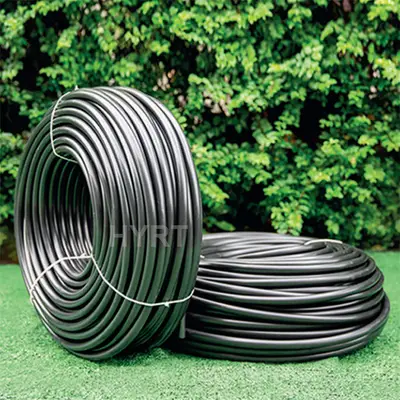
PE pipes are flexible, lightweight, and suitable for many agricultural water distribution applications. Their flexibility can make installation easier around field boundaries, crop rows, and uneven terrain.
They are commonly used in drip irrigation networks, distribution lines, and connections between main pipelines and smaller tubing. The selected product should have an appropriate pressure rating and suitable resistance to environmental exposure.
Polyvinyl Chloride (PVC) Pipes
PVC pipes are rigid and commonly used for irrigation mainlines and distribution networks. Their dimensional stability makes them useful where relatively straight pipeline sections are preferred.
PVC can be suitable for both drip and sprinkler systems when the pipe specifications match the required operating conditions. Buyers should check the pressure rating, jointing method, and installation requirements before making a selection.
High-Density Polyethylene (HDPE) Pipes
HDPE pipes are widely used in agricultural water conveyance where flexibility, strength, and resistance to environmental stress are important. Depending on their specifications, they may be suitable for underground pipelines and longer distribution routes.
The appropriate material depends on the system design, installation environment, pressure requirements, and overall project budget rather than on material type alone.
2. Determine the Required Pipe Diameter
Pipe diameter is one of the most important factors in irrigation system design. A pipe that is too small may create excessive friction losses and reduce the pressure available at the outlets. An oversized pipe may increase purchasing and installation costs without providing a meaningful benefit.
For drip irrigation, pipe diameters should support the required flow across the mainline, submains, and drip lines. For sprinkler irrigation, sizing must account for the combined flow demand of operating sprinklers and the distance water must travel.
When determining pipe diameter, consider:
- Total flow rate required by the irrigation system.
- Length of each pipeline section.
- Number of emitters or sprinklers operating simultaneously.
- Elevation differences across the field.
- Available pump pressure and allowable friction losses.
Hydraulic calculations can help establish suitable diameters and maintain more consistent water distribution throughout the network.
3. Check Operating Pressure Requirements
Drip and sprinkler systems require different operating pressures depending on their design and equipment. Drip irrigation commonly uses pressure regulation to deliver water within the specified operating range of the emitters, while sprinkler systems may require higher pressures to achieve the intended spray pattern and coverage.
Every pipe should be rated for the pressure it is expected to experience. The design should also account for possible pressure surges, pump operation, elevation changes, and other conditions that can affect pipeline stress.
For drip systems, pressure regulation helps maintain consistent emitter performance. For sprinkler systems, appropriate pressure management supports effective water distribution and reduces the risk of leaks or pipe failure.
Selecting pipes with suitable pressure ratings is essential, but the entire system must also be designed and operated within the limits of its fittings, valves, pumps, and other components.
4. Consider Flow Rate and Water Distribution
Efficient irrigation depends on delivering enough water to the intended crop areas without creating unnecessary losses. Pipe dimensions, internal surface characteristics, network layout, and pressure conditions all influence flow performance.
In drip systems, insufficient flow can prevent some emitters from receiving the required water, especially along long lateral lines. In sprinkler systems, excessive friction losses may reduce pressure at distant sprinklers and affect coverage uniformity.
To avoid these problems, calculate the expected flow requirements before purchasing pipes. Consider whether the system will operate in separate irrigation zones and how many outlets will run at the same time.
A properly designed distribution network helps deliver water more consistently and supports effective irrigation scheduling.
5. Evaluate Field Conditions and Installation Methods
The environment in which irrigation pipes are installed can influence material selection and long-term durability. Pipes may be buried underground, installed on the soil surface, or routed along field boundaries and structures.
For above-ground installations, sunlight exposure and temperature fluctuations should be considered. Underground pipelines may require protection against soil loads, ground movement, and accidental damage from agricultural machinery.
The installation method also affects the type of joints and fittings required. Flexible pipes may be easier to route around obstacles, while rigid pipes may require additional fittings to accommodate changes in direction.
Choose products designed for the expected conditions and follow the manufacturer’s installation recommendations to reduce avoidable damage.
6. Ensure Compatibility With Irrigation Components
Irrigation pipes must connect properly with the rest of the system. Incompatible fittings, valves, filters, emitters, or sprinkler connections can lead to leaks, installation delays, and reduced performance.
For drip irrigation, verify compatibility with drip tubing, connectors, filters, pressure regulators, and fertilizer injection equipment where applicable. For sprinkler systems, check the connections and pressure requirements of sprinkler heads, risers, control valves, and pumps.
It is also important to consider maintenance access. Components that are easy to inspect and replace can help reduce downtime when repairs are needed.
Before placing an order, review the specifications of the complete irrigation network rather than evaluating each pipe in isolation.
7. Compare Quality, Durability, and Cost
The lowest-priced pipe may not always be the most economical option over the life of an irrigation system. Poor material quality or unsuitable specifications can increase the risk of leakage, repairs, and premature replacement.
Compare products based on material composition, pressure ratings, dimensional accuracy, applicable standards, and suitability for the intended application. Request technical data sheets and relevant test documentation to support purchasing decisions.
Long-term cost considerations should include the initial purchase price, transportation, installation, maintenance, expected service life, and potential water losses caused by system failures.
A product that meets the project’s requirements and offers dependable performance may provide better overall value than one selected on price alone.
8. Plan for Maintenance and Future Expansion
An irrigation system should be designed with routine maintenance in mind. Periodic inspections can identify damaged pipes, leaking joints, and pressure irregularities before they affect a large area.
Drip irrigation systems may require regular filter cleaning and line flushing to reduce blockage risks. Sprinkler systems may need checks for clogged nozzles, worn components, and uneven spray patterns.
For expanding agricultural operations, consider whether the pipeline network can accommodate additional irrigation zones or increased water demand. Future expansion should be planned carefully to ensure that existing pipes, pumps, and other components have sufficient capacity.
Proper planning helps avoid unnecessary reconstruction when the farm’s irrigation requirements change.
Common Mistakes to Avoid When Selecting Irrigation Pipes
Several common errors can affect the performance and cost of drip and sprinkler systems:
- Choosing pipe diameters without calculating flow and pressure losses.
- Using pipes with pressure ratings unsuitable for the system.
- Ignoring compatibility between pipes, fittings, and irrigation equipment.
- Overlooking sunlight exposure or underground loading conditions.
- Selecting products based exclusively on the lowest purchase price.
- Neglecting filtration, pressure regulation, and routine maintenance requirements.
Avoiding these mistakes can help improve system reliability and reduce unnecessary operating expenses.
Conclusion
Selecting irrigation pipes for drip and sprinkler systems requires careful consideration of material type, pipe diameter, pressure rating, flow requirements, installation conditions, and component compatibility. Drip systems often depend on carefully regulated water delivery through smaller distribution lines, while sprinkler systems require sufficient flow and pressure to provide the intended coverage.
By evaluating the complete irrigation design before purchasing materials, farmers can select pipes that meet their operational needs and support efficient water use. Proper installation, regular maintenance, and appropriate pressure management further contribute to dependable irrigation performance and long-term agricultural productivity.