Selecting an ablution fixture requires more thought than choosing an ordinary bathroom basin. Its purpose is to support repeated washing throughout the day, so the design must be comfortable, hygienic, durable, and appropriate for the number of people using it. A fixture that works well in a private ensuite may be unsuitable for a busy mosque, where several worshippers may need access within a short period. Starting with the intended users and installation environment makes it easier to narrow down the choices.
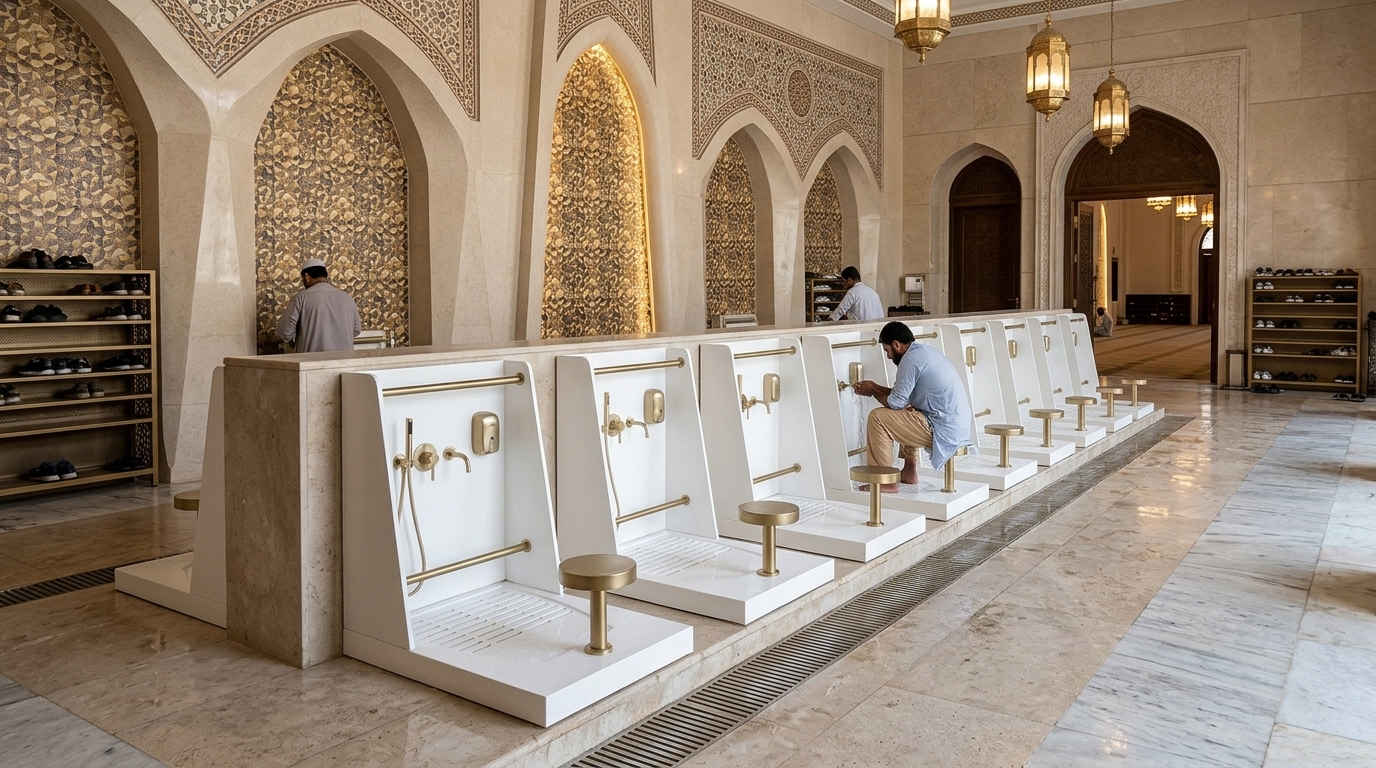
A Wudu sink is a purpose-designed washing fixture that can make the physical steps of ablution more convenient. Depending on the model, it may provide a lower washing position, a dedicated foot-washing area, a wider basin, or fittings arranged for easier rinsing. Not every product has identical features, however. Buyers should compare the actual dimensions, configuration, and installation requirements rather than relying on the product name alone.
Begin with the People Who Will Use It
The first consideration is the user group. In a family home, the fixture may need to accommodate adults, children, and older relatives. A comfortable height for one person may be awkward for another, so consider the range of users before fixing the basin position. If children will use it regularly, think about safe access to the tap and whether a stable step or other assistance will be necessary.
For a mosque or community facility, expected traffic is equally important. Estimate how many people may use the washing area during peak prayer periods. A single station may be adequate for a small private setting but create queues in a busy facility. Multiple stations, clear circulation space, and durable fittings can make shared use more orderly.
Measure the Installation Area Carefully
Accurate measurements help prevent problems after purchase. Record the available width, depth, and height, and note the position of existing water supply and waste connections. Include space for users to stand, move, and wash comfortably. A basin that technically fits into a corner may still be impractical if it blocks a doorway or leaves too little room to approach it.
Also consider whether the fixture will be wall-mounted or floor-supported. Wall-mounted products can create an open area beneath the basin, but the wall must be strong enough for the product and the forces created during use. Floor-supported models may be easier to accommodate in some buildings, although they require suitable floor connections and careful sealing.
Compare Basin Shape and Ablution Features
The basin should provide enough room for the intended washing movements without occupying unnecessary space. A deeper bowl may help contain splashes, while a wider washing surface can give users more room to position their hands and feet. A recessed foot-washing section may be useful for users who prefer a dedicated lower area.
Look closely at the tap position, too. The water outlet should reach the useful part of the basin, and the controls should be easy to operate. If the tap is placed too close to an edge, water may splash beyond the bowl. Ask the supplier for dimensioned drawings or installation guidance if the product photographs do not show these details clearly.
Prioritize Drainage and Floor Safety
Effective drainage is essential in any ablution area. Check the waste outlet size, the location of the drain, and the plumbing requirements. The basin should empty reliably, and the surrounding floor should be designed to cope with occasional splashes. Water-resistant finishes, suitable floor gradients where applicable, and slip-resistant surfaces can help reduce maintenance and safety concerns.
In public facilities, drainage capacity should be assessed in relation to the number of stations and likely simultaneous use. A qualified plumber can verify whether the existing waste system is suitable or needs modification.
Choose Materials for Frequent Use
A fixture used several times a day needs a surface that is practical to clean and appropriate for a wet environment. Ceramic and solid-surface materials are common options, but performance depends on the product’s construction and finish. Ask about resistance to staining, scratching, cleaning products, and repeated water exposure. For shared facilities, also check the availability of replacement fittings and the supplier’s maintenance recommendations.
Make the Decision as a Complete Installation
The purchase price is only one part of the overall cost. Include plumbing changes, waterproofing, mounting hardware, tap fittings, installation labour, and ongoing cleaning. Review the warranty and confirm which components are included.
The right choice is the one that suits the users, fits the room, drains effectively, and can be maintained over time. Careful planning allows homes and mosques to provide a comfortable, dependable place for ablution without compromising the wider bathroom layout.