
Choosing packaging equipment is a decision that extends well beyond the initial installation. A machine may meet today’s production requirements, but changing product volumes, carton formats, maintenance needs, and workforce responsibilities can affect its usefulness over time.
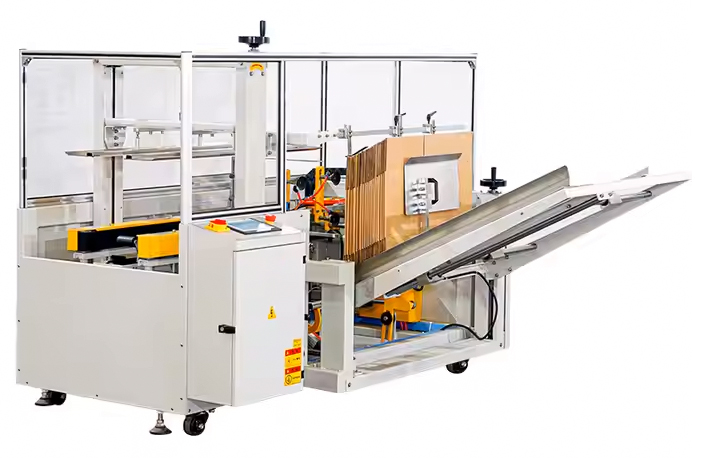
A Case Erecting Machine is designed to automate the opening and forming of flat cartons before they enter the next stage of packaging. Evaluating its long-term operating requirements can help manufacturers determine whether the equipment will remain practical, reliable, and adaptable as production needs evolve.
Consider Expected Production Volume
Production volume is one of the first factors to evaluate. Equipment should be capable of handling the expected number of cartons without consistently operating at its maximum capacity.
It is also useful to consider potential increases in demand. A machine with sufficient capacity for foreseeable growth may avoid the need for an early replacement or major line modification.
Review Carton Requirements Over Time
Packaging formats can change as manufacturers introduce new products or modify existing ones. A machine that handles only one carton size may become restrictive if the business eventually needs several case formats.
Review the current carton range and consider whether future products are likely to require different dimensions, board grades, or flap configurations.
Flexibility can be particularly valuable for facilities that regularly change packaging formats.
Evaluate Changeover Demands
If multiple carton sizes are used, changeover requirements can have a significant impact on long-term productivity. Frequent, complicated adjustments may create additional downtime and require more operator involvement.
When assessing equipment, consider how settings are changed, which components require adjustment, and how easily operators can return the machine to normal operation after a format change.
Plan for Preventive Maintenance
Long-term reliability depends heavily on routine maintenance. Moving components, sensors, guides, sealing systems, and other machine elements require appropriate inspection and servicing.
A practical maintenance plan should include scheduled cleaning, lubrication where specified, component inspection, and replacement of worn parts. Following the manufacturer’s recommended maintenance intervals can help reduce avoidable breakdowns.
Understand Replacement Part Requirements
Consumable and wear components are an unavoidable part of operating automated machinery. Before selecting equipment, manufacturers should understand which parts are expected to require periodic replacement.
It is helpful to know the availability of commonly required components and the expected lead times for less frequently needed parts. Maintaining appropriate spare parts can reduce downtime when maintenance is required.
Consider Operator Training
Although a case-forming system reduces manual carton handling, operators still need to understand how the equipment works. Training should cover normal operation, carton loading, basic adjustments, cleaning, fault recognition, and safe shutdown procedures.
As personnel change over time, training should be treated as an ongoing requirement rather than a one-time installation activity.
Monitor Machine Performance
Long-term equipment evaluation should be based on actual operating data rather than assumptions. Tracking performance can reveal gradual changes that may otherwise go unnoticed.
Useful measurements can include:
- Cartons formed per hour
- Unplanned downtime
- Frequency of carton jams
- Changeover duration
- Maintenance frequency
- Rejected or improperly formed cases
Reviewing these indicators over time can help identify trends and determine whether maintenance or process adjustments are needed.
Assess Integration With Other Equipment
Packaging lines rarely operate as isolated machines. A case erector may need to work alongside conveyors, case packers, sealers, inspection systems, and palletizing equipment.
As other equipment is upgraded or replaced, compatibility should remain a consideration. Communication between machines, transfer heights, case spacing, and production rates can all influence the effectiveness of the overall line.
Account for Facility Conditions
The operating environment can affect equipment performance and maintenance requirements. Temperature, humidity, dust, carton debris, and general cleanliness should be considered when planning long-term operation.
Good housekeeping practices can help prevent material buildup around sensors and moving components. Appropriate environmental controls may also be necessary depending on the equipment and facility.
Review Energy and Utility Needs
Long-term operating costs include more than maintenance and labor. Depending on the machine configuration, the equipment may require electrical power, compressed air, adhesive, tape, or other consumables.
Understanding these requirements helps manufacturers estimate ongoing operating expenses and confirm that the facility’s utility infrastructure can support the equipment reliably.
Consider Safety Over the Equipment’s Life
Safety requirements should remain part of equipment management throughout its operating life. Guards, emergency stops, access systems, and other protective features should be inspected and maintained according to applicable requirements.
Any modifications to the packaging line should also account for how they affect operator access and machine safety.
Plan for Future Automation
A case erector may initially operate as a standalone machine but later become part of a more automated packaging system. Future plans could include automated product loading, case sealing, inspection, robotic palletizing, or centralized production monitoring.
Considering potential expansion during the initial equipment selection can make future integration easier and reduce the likelihood of major redesigns.
Evaluate Technical Support
Long-term equipment performance also depends on access to appropriate technical assistance. Manufacturers should consider the availability of documentation, troubleshooting guidance, replacement parts, and qualified service support.
Techflow Pack provides automated packaging equipment for case-forming applications, while the specific long-term service requirements depend on the machine configuration and operating environment.
Calculate Total Cost of Ownership
The purchase price is only one part of the financial picture. A long-term evaluation should consider the total cost of owning and operating the equipment.
Relevant factors can include:
- Initial purchase and installation
- Labor requirements
- Energy and utilities
- Consumables
- Preventive maintenance
- Replacement parts
- Downtime
- Training
- Future modifications
Looking at these costs together provides a more realistic understanding of the machine’s long-term value.
Conclusion
Evaluating the long-term operating needs of a case erecting machine requires attention to more than its initial performance. Production volume, carton flexibility, maintenance, spare parts, operator training, integration, facility conditions, safety, and operating costs can all influence how effectively the equipment performs over time.
A thorough evaluation before installation can help manufacturers select equipment that meets current requirements while remaining practical as production develops. With appropriate maintenance, monitoring, and planning, automated case forming can provide consistent support for packaging operations over the long term.

