Modern manufacturing facilities rely on efficient packaging operations to prepare finished products for storage, transportation, and distribution. As production volumes increase and customer expectations become more demanding, businesses are adopting advanced technologies to improve the speed, accuracy, and reliability of their packaging processes. End-of-line operations are particularly important because they connect completed production activities with warehouse and logistics operations.
End of Line Packaging Automation combines different machines, control systems, and material-handling technologies to automate the final stages of packaging. These systems can perform carton forming, product loading, case sealing, labeling, palletizing, and wrapping with limited manual intervention. Understanding the technologies behind these operations helps manufacturers select suitable equipment and build packaging lines that support their production requirements.
1. Automatic Case Erectors
Automatic case erectors are used to transform flat cardboard blanks into properly formed cartons. Instead of requiring employees to manually fold and prepare every box, these machines perform the process through mechanical movements and controlled equipment.
A typical case erector includes a carton magazine, blank-feeding mechanism, folding components, and a sealing unit. The machine picks up a flat carton, opens it, folds the bottom flaps, and secures the base.
This technology helps manufacturers maintain a steady supply of cartons for downstream packaging operations. It is particularly useful in facilities that process large quantities of products and require consistent carton dimensions.
2. Automatic Case Packing Machines
Case packing machines place products into shipping cartons according to predefined packaging arrangements.
Different machine designs are available depending on product characteristics and production requirements. Some systems load products vertically, while others use horizontal loading methods.
Common applications include packing:
- Bottles and containers.
- Food and beverage packages.
- Cans and jars.
- Household products.
- Personal care items.
- Small consumer goods.
Automatic case packers help maintain consistent product positioning and reduce repetitive manual handling. They can also be integrated with conveyors, carton erectors, and sealing machines to create a continuous packaging process.
3. Conveyor and Material Handling Systems
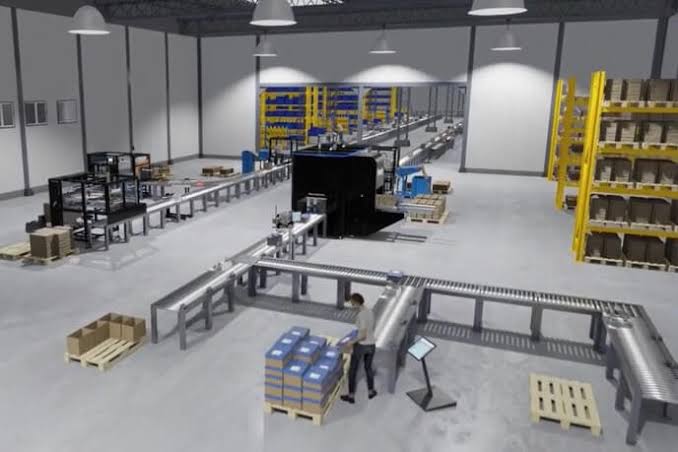
Conveyors are essential for connecting different machines within an automated packaging line. They transport products, cartons, and finished packages between individual processing stations.
Common conveyor technologies include belt conveyors, roller conveyors, chain conveyors, and modular plastic belt systems.
Each type serves different purposes. Belt conveyors are suitable for many packaged products, while roller conveyors can transport cartons and cases between workstations. Chain conveyors are often used for heavier loads or specific industrial applications.
Well-designed material handling systems help reduce unnecessary movement, minimize manual transportation, and maintain a coordinated production flow.
4. Robotic Packaging Systems
Robotics has become an important technology in modern end-of-line packaging operations. Robotic arms can perform repetitive tasks with controlled movement and programmable positioning.
Depending on the application, robots may be used for product picking, carton loading, case packing, sorting, and palletizing.
Robotic systems can be equipped with different end-of-arm tools, including suction cups, mechanical grippers, and specialized product-handling attachments.
Their flexibility makes them useful for manufacturers handling multiple product sizes or packaging formats. With suitable programming and changeover procedures, robotic equipment can support different production requirements.
5. Automatic Carton Sealing Machines
Carton sealing machines close and secure shipping boxes after products have been loaded.
Depending on the packaging design, these machines may use adhesive tape, hot-melt glue, or other sealing methods.
Automatic carton sealers can adjust to different box dimensions in suitable configurations. They help create uniform closures and reduce the manual effort involved in preparing packages for transportation.
Reliable sealing is important because cartons may experience movement, stacking pressure, and handling during distribution. Selecting the correct sealing technology helps maintain package integrity.
6. Automatic Labeling and Coding Systems
Product identification is essential for inventory management, distribution, and supply chain tracking.
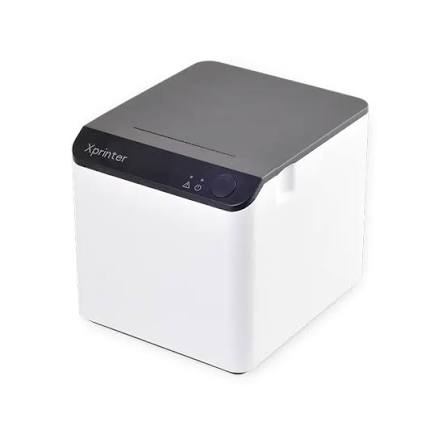
Automatic labeling systems apply labels to cartons, containers, or other packaging surfaces. Coding equipment can print information such as batch numbers, manufacturing dates, expiration dates, and product identification details.
Common technologies include:
- Thermal transfer printing.
- Inkjet coding.
- Laser marking.
- Print-and-apply labeling.
- Barcode labeling systems.
These technologies help manufacturers maintain consistent product identification and reduce errors associated with manual labeling.
When connected to production databases or warehouse management systems, labeling equipment can also support improved traceability.
7. Checkweighers and Inspection Equipment
Quality inspection technologies help verify that finished packages meet defined requirements before entering the distribution process.
Automatic checkweighers measure package weight while products move along a conveyor. Packages outside the configured weight range can be identified and rejected automatically.
Other inspection technologies may include:
- Metal detectors for identifying certain metallic contaminants.
- X-ray inspection systems for detecting selected foreign materials.
- Machine vision systems for checking labels and package appearance.
- Barcode scanners for verifying product identification.
- Seal inspection systems for checking closure quality.
The appropriate inspection equipment depends on the product, industry regulations, and quality control requirements.
Integrating inspection technologies into the end-of-line process allows manufacturers to identify certain packaging problems before products reach the warehouse.
8. Automatic Palletizing Systems
Palletizing is the process of arranging cartons or packages onto pallets for storage and transportation.
Automatic palletizers perform this operation using mechanical lifting systems, product transfer mechanisms, and programmed stacking patterns.
There are several common configurations, including conventional palletizers and robotic palletizing systems.
Conventional palletizers are often designed for high-volume operations with relatively consistent package arrangements. Robotic palletizers offer greater flexibility when manufacturers handle different carton sizes, product types, or pallet patterns.
Automated palletizing helps create organized loads, reduces repetitive lifting, and improves the consistency of pallet preparation.
9. Stretch Wrapping Machines
After cartons are arranged on a pallet, stretch wrapping machines apply plastic film around the load to help stabilize it during transportation and storage.
These machines may use rotating turntables, rotating arms, or other wrapping configurations depending on the load and production requirements.
Some systems include automatic film cutting and attachment, while others require limited operator involvement.
Important features may include adjustable wrapping tension, programmable wrapping patterns, film carriage controls, and load-height detection.
Properly configured stretch wrapping equipment helps reduce load movement and supports safer material handling.
10. Programmable Logic Controllers
Programmable logic controllers (PLCs) are important components of automated packaging systems. They manage machine operations by receiving signals from sensors and controlling connected equipment.
A PLC can coordinate conveyor movement, carton positioning, product detection, machine timing, and safety-related operations.
For example, sensors may detect when a carton reaches a specific position. The controller then activates the appropriate machine operation and allows the carton to move to the next station.
PLCs help different machines operate according to predefined sequences. They also make it easier for technicians to adjust operating parameters and troubleshoot certain equipment issues.
11. Human-Machine Interfaces
Human-machine interfaces (HMIs) allow operators to interact with automated packaging equipment.
An HMI usually includes a touchscreen or control panel that displays operating information and provides access to machine settings.
Operators may use the interface to:
- Start and stop equipment.
- Select packaging recipes.
- Adjust operating parameters.
- Monitor production status.
- View alarms and machine warnings.
- Identify certain equipment faults.
Modern HMIs make packaging systems easier to monitor and manage. They can also help operators identify problems without manually inspecting every machine component.
12. Sensors and Machine Vision Technology
Sensors provide important information about product position, movement, and equipment conditions.
Photoelectric sensors can detect products on conveyors, while proximity sensors identify the presence of objects within a defined range. Other sensors monitor pressure, temperature, speed, and equipment position.
Machine vision systems use cameras and image-processing software to inspect products and packaging.
For example, a vision system may check whether a carton label is present, whether a barcode is readable, or whether a package is positioned correctly.
These technologies support automated decision-making and help reduce certain types of packaging errors.
13. Industrial Communication and Data Monitoring
Modern packaging lines often contain multiple machines that must exchange information to operate efficiently.
Industrial communication technologies allow controllers, sensors, HMIs, and production management systems to share operational data.
Depending on the system design, manufacturers may use industrial Ethernet, fieldbus networks, or other communication protocols.
Data monitoring platforms can collect information about production speed, machine status, downtime, and packaging output.
This information helps production managers identify operational problems, evaluate equipment performance, and plan maintenance activities.
14. Integration with Manufacturing and Warehouse Systems
End-of-line packaging equipment can also connect with broader business systems.
Manufacturing execution systems (MES) help coordinate production activities and collect operational information. Warehouse management systems (WMS) support inventory control, product identification, and storage operations.
When packaging equipment communicates with these systems, businesses can improve coordination between production and distribution.
For example, labeling equipment may receive product information from a production database, while pallet identification systems can generate data used during warehouse receiving.
The level of integration depends on the facility’s software infrastructure and equipment capabilities.
How to Select the Right Technologies for an Automated Packaging Line
Not every manufacturer needs all available technologies. Equipment selection should reflect actual production requirements and future business objectives.
Several factors should be evaluated before investing:
Production capacity: Determine the required number of products, cartons, and pallets processed per hour.
Product characteristics: Consider product dimensions, weight, fragility, and handling requirements.
Packaging formats: Evaluate carton sizes, materials, sealing methods, and labeling specifications.
Factory layout: Check available floor space, conveyor routes, operator access, and maintenance areas.
Equipment compatibility: Ensure that machines can communicate and operate together without creating unnecessary bottlenecks.
Maintenance requirements: Review spare parts availability, technical support, servicing needs, and operator training.
Future expansion: Consider whether the system can accommodate additional products, higher production volumes, or new packaging formats.
A well-planned system should balance automation capabilities with practical operating requirements.
Conclusion
Modern end-of-line packaging automation systems depend on several technologies working together. Case erectors, packing machines, conveyors, robotic equipment, sealing systems, labeling machines, inspection devices, palletizers, and stretch wrappers each perform important functions in preparing finished goods for distribution.
Control technologies such as PLCs, HMIs, sensors, and industrial communication systems coordinate these machines and support efficient operation. When properly integrated, these solutions can improve packaging consistency, reduce repetitive manual work, support quality control, and increase production capacity.
Manufacturers should evaluate their products, packaging formats, facility layout, and long-term production goals before selecting equipment. For businesses researching integrated packaging solutions, Techflow Pack provides a useful reference when exploring technologies that can support more organized and efficient end-of-line operations.