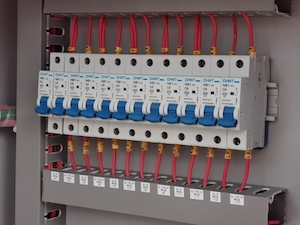
Modern electrical systems are becoming more complex as homes, commercial buildings, and industrial facilities rely on an increasing number of connected devices and power-consuming equipment. Traditional circuit breakers provide essential protection against overloads and short circuits, but they generally offer limited information about energy consumption and circuit performance. As a result, managing electrical systems efficiently often requires additional monitoring equipment and manual inspections.
Smart circuit breakers combine conventional electrical protection with digital monitoring, communication, and control capabilities. By providing access to useful operating data and enabling more flexible circuit management, a Smart Circuit Breaker can help users improve electrical safety, monitor energy consumption, identify abnormal conditions, and make better decisions about power usage.
What Is a Smart Circuit Breaker?
A smart circuit breaker is an advanced electrical protection device that combines traditional circuit interruption functions with electronic monitoring and communication features.
Like a conventional breaker, it is designed to disconnect a circuit when specified fault conditions occur, such as overloads or short circuits. Depending on its design, it may also monitor electrical parameters, communicate with connected systems, and support remote operation.
Common smart circuit breaker capabilities include:
- Real-time monitoring of current and voltage.
- Measurement of energy consumption and power usage.
- Remote switching and circuit control.
- Overload and fault notifications.
- Communication with building management or energy management systems.
- Historical data collection and performance analysis.
Available functions vary by product. Some smart breakers provide basic wireless monitoring, while more advanced models support integration with automated electrical distribution systems.
How Does a Smart Circuit Breaker Work?
Smart circuit breakers use a combination of electrical sensing components, electronic control circuits, and communication technology.
1. Electrical Parameter Monitoring
Built-in sensors or measurement circuits collect information about electrical conditions, including current, voltage, and power consumption.
Depending on the device, additional measurements may include frequency, power factor, and energy usage.
This information gives users a clearer picture of how connected circuits operate.
2. Electronic Data Processing
The collected measurements are processed by the breaker’s electronic control system.
The device can compare operating conditions with configured limits and identify abnormal patterns. For example, it may detect unusually high current consumption or voltage conditions outside an expected range.
3. Communication with Connected Systems
Many smart circuit breakers support communication through wireless or wired technologies.
Depending on the model, supported options may include Wi-Fi, Bluetooth, Zigbee, Modbus, or other industrial communication protocols.
The breaker can transmit operating information to a mobile application, monitoring platform, or building management system.
4. Remote Switching and Control
Some models allow authorized users to open or close the breaker remotely through a compatible application or control system.
This function can be useful for managing selected circuits without physically accessing the distribution board.
Remote operation should always follow the manufacturer’s safety requirements and must not replace proper electrical isolation procedures during maintenance.
5. Fault Detection and Notifications
When the device identifies a specified abnormal condition, it may disconnect the circuit and send an alert.
Notifications can help users identify potential electrical problems more quickly and arrange inspection before a minor issue develops into a larger operational concern.
Key Features of Smart Circuit Breakers
Smart circuit breakers offer several features that distinguish them from conventional protective devices.
Real-Time Energy Monitoring
One of the most useful capabilities is the ability to monitor electricity consumption at the circuit level.
Users can review how much power different appliances, equipment groups, or electrical circuits consume. This information can reveal energy-intensive loads and opportunities for reducing unnecessary usage.
Remote Operation
Compatible smart breakers allow users to control selected circuits through mobile applications or centralized systems.
For example, an authorized facility manager may switch off a nonessential circuit remotely when it is no longer required.
Fault Alerts and Notifications
Smart breakers can provide notifications when monitored electrical conditions exceed configured limits or when a protective trip occurs.
This can help maintenance teams respond to problems more efficiently.
Historical Data and Reporting
Some devices store or transmit historical electrical measurements.
Analyzing these records can help identify recurring load peaks, changes in consumption patterns, and potential equipment performance issues.
Integration with Smart Building Systems
Advanced smart breakers can communicate with building automation platforms, energy management systems, and industrial monitoring networks.
This integration supports centralized visibility and coordinated electrical control.
Configurable Protection Settings
Depending on the product, electronic protection settings may be adjustable. Some devices also provide configurable operating limits and alarms.
Protection adjustments must be made by qualified personnel in accordance with the device specifications and electrical system design.
How Smart Circuit Breakers Improve Electrical Monitoring
Electrical monitoring helps users understand what is happening within a distribution system rather than relying only on occasional inspections or electricity bills.
1. Better Visibility of Power Consumption
Traditional circuit breakers generally do not provide detailed consumption information.
Smart breakers with metering capabilities can show how much electricity individual circuits use. This helps building owners and facility managers understand where energy is being consumed.
2. Early Identification of Abnormal Conditions
Unusual current or voltage readings may indicate an electrical problem, equipment malfunction, or unexpected load increase.
Monitoring these conditions can help maintenance personnel investigate potential issues earlier.
However, monitoring alerts are not a substitute for properly rated protective devices and professional electrical inspections.
3. Improved Load Management
When several circuits operate simultaneously, total demand can become difficult to manage.
Smart monitoring makes it easier to identify circuits with high consumption and evaluate whether loads should be redistributed or operated at different times.
4. Simplified Electrical Supervision
In large buildings and industrial facilities, inspecting every distribution board manually can require considerable time.
Centralized monitoring allows authorized personnel to review information from multiple connected devices through a compatible platform.
How Smart Circuit Breakers Improve Electrical Control
In addition to monitoring, smart circuit breakers can provide more flexible control over selected electrical circuits.
Remote Switching
Authorized users may be able to disconnect nonessential circuits without physically visiting the distribution panel.
This can be useful in buildings with multiple electrical zones or equipment rooms.
Scheduled Circuit Operation
Some smart systems support scheduled switching based on operating requirements.
For example, selected lighting or noncritical equipment circuits may be programmed to operate during specific hours.
Scheduling should be configured carefully to avoid interrupting essential services or equipment that requires continuous power.
Centralized Control
When multiple smart breakers are connected to a compatible platform, users can manage several circuits from one interface.
This can simplify supervision in offices, hotels, warehouses, and industrial facilities.
Integration with Automation Systems
Smart breakers may work alongside sensors, controllers, and building management platforms.
For example, an automation system could use occupancy information or operating schedules to manage selected electrical loads.
The available control functions depend on the device’s communication capabilities and system compatibility.
The Role of Smart Circuit Breakers in Energy Management
Energy management involves measuring, understanding, and controlling electricity consumption to improve efficiency without compromising safety or operational requirements.
Smart circuit breakers can contribute to this process in several ways.
Identifying Energy-Intensive Circuits
Circuit-level monitoring helps users determine which areas or equipment groups consume the most electricity.
This information can support decisions about equipment upgrades, operating schedules, and energy-saving measures.
Reducing Unnecessary Power Consumption
Some equipment continues consuming electricity even when it is not actively needed.
Remote switching and scheduling can help reduce unnecessary operation in suitable noncritical circuits.
Supporting Peak Demand Management
Commercial and industrial facilities may experience periods when electricity demand rises significantly.
Monitoring load patterns helps facility managers identify peak-demand periods and evaluate opportunities to shift flexible loads.
Improving Energy Cost Awareness
Detailed consumption information can help users understand how different circuits contribute to electricity costs.
This makes energy reports more useful for budgeting and evaluating the results of efficiency improvements.
Supporting Sustainability Goals
By improving visibility into electricity consumption, smart breakers can support broader energy-efficiency initiatives.
Organizations can use monitoring data to measure consumption trends, identify improvement opportunities, and track progress toward energy targets.
Smart Circuit Breaker vs. Traditional Circuit Breaker
Both devices provide electrical protection, but their monitoring and communication capabilities are different.
| Feature | Traditional Circuit Breaker | Smart Circuit Breaker |
|---|---|---|
| Overload protection | Available, depending on type | Available, depending on type |
| Short-circuit protection | Available, depending on type | Available, depending on type |
| Energy monitoring | Generally not included | Available on suitable models |
| Remote operation | Not usually available | Supported by compatible models |
| Communication | Generally not included | Wired or wireless options may be available |
| Fault notifications | Usually limited to local indication | Remote alerts may be supported |
| Historical data | Not typically available | Available on models with data storage or platform integration |
| Building automation integration | Requires additional equipment | Supported by compatible models |
A smart circuit breaker does not automatically provide better fault interruption than every conventional breaker. Its protection performance must still be evaluated using rated current, voltage, breaking capacity, and relevant product specifications.
Common Applications of Smart Circuit Breakers
Smart circuit breakers can be used in different environments where electrical monitoring and control provide practical benefits.
Residential Buildings
In smart homes, connected breakers can help homeowners monitor electricity consumption across selected circuits.
They may also support remote switching, scheduled operation, and notifications about certain abnormal electrical conditions.
Commercial Buildings
Offices, shopping centers, hotels, and restaurants often contain multiple electrical distribution circuits.
Smart breakers can help facility managers monitor energy usage, manage selected loads, and improve visibility across building systems.
Industrial Facilities
Factories and production facilities rely on machinery, motors, lighting, and auxiliary equipment.
Smart monitoring can help maintenance teams track electrical conditions, identify unusual consumption patterns, and support more organized power management.
Data Centers
Data centers require careful management of electrical distribution because equipment availability and power demand are critical.
Suitable smart protection devices can contribute to circuit monitoring and centralized supervision when integrated into an appropriately designed power management system.
Renewable Energy Installations
Solar power systems and other distributed energy installations may require advanced monitoring and coordinated electrical protection.
Compatible smart breakers can support visibility and control within selected distribution arrangements. Their use must follow the electrical design and the requirements of the connected inverter and protection equipment.
Important Factors When Choosing a Smart Circuit Breaker
Selecting a suitable device requires evaluating both its electrical protection characteristics and its digital capabilities.
1. Rated Current and Voltage
The rated current and voltage must match the electrical circuit and connected load.
The device should also be compatible with the supply type and installation conditions.
2. Breaking Capacity
The rated short-circuit breaking capacity must be suitable for the prospective fault current at the installation point.
This is essential because smart monitoring features do not replace the need for adequate fault-interruption performance.
3. Protection Functions
Check which protection functions the device provides.
Some smart breakers offer overload and short-circuit protection, while other smart switching devices may primarily provide monitoring and remote control. Confirm the exact product specifications before installation.
4. Communication Compatibility
Choose a communication method that works with the existing monitoring or automation system.
Consider network coverage, protocol compatibility, data security, and the need for a central gateway.
5. Energy Measurement Accuracy
If energy management is a major priority, review the device’s metering accuracy and supported measurement parameters.
Reliable data is important when comparing circuit consumption or evaluating energy-saving initiatives.
6. Remote Control and Safety Features
Check whether the breaker supports remote switching, access permissions, operating schedules, and status feedback.
Remote functions should include suitable safeguards to prevent unauthorized operation or accidental interruption of critical circuits.
7. Installation and Maintenance Requirements
Consider the distribution board layout, available space, operating environment, and manufacturer’s installation instructions.
The device should be installed and configured by qualified electrical professionals.
Installation and Maintenance Best Practices
Proper installation is essential for both electrical protection and reliable smart functionality.
- Verify electrical compatibility: Confirm voltage, current rating, pole configuration, and breaking capacity.
- Check communication requirements: Ensure that the device can connect reliably to the intended network or control platform.
- Use qualified installers: Electrical connections and protection settings should be handled by competent professionals.
- Configure monitoring parameters: Set suitable measurement limits and alerts according to the connected loads.
- Protect network access: Use appropriate authentication and security settings for connected systems.
- Test switching functions: Verify that local and remote control operate as specified.
- Review consumption data: Regularly examine reports to identify unusual patterns or opportunities for improvement.
- Follow maintenance guidance: Inspect and test the device according to manufacturer recommendations and applicable electrical standards.
Cybersecurity should also be considered when smart breakers connect to building networks. Secure configuration, controlled user access, and appropriate network protection help reduce the risk of unauthorized control.
Challenges and Limitations of Smart Circuit Breakers
Although smart circuit breakers offer useful capabilities, they also involve considerations that should be evaluated before installation.
Higher Initial Cost
Smart breakers may cost more than conventional devices because of their electronic measurement and communication components.
However, their monitoring and control capabilities may provide operational benefits in installations where detailed electrical data is valuable.
Dependence on Communication Networks
Remote monitoring and control may depend on a stable network connection.
If communication becomes unavailable, the device’s local protective functions should continue operating according to its design, but remote access and notifications may be interrupted.
Compatibility Requirements
Not every smart breaker works with every building automation platform or communication protocol.
Compatibility should be checked before purchasing equipment for an integrated system.
Data Security
Connected electrical devices introduce cybersecurity considerations.
Organizations should use secure networks, strong authentication, controlled permissions, and updated device software where supported.
Need for Professional Configuration
Incorrect wiring, unsuitable protection settings, or poor system integration can reduce reliability.
Professional installation and commissioning help ensure that the device operates correctly within the electrical installation.
Conclusion
Smart circuit breakers are changing how residential, commercial, and industrial electrical systems are monitored and managed. By combining conventional circuit protection with digital measurement, communication, and control features, they provide greater visibility into electrical conditions and energy consumption.
Their capabilities can help users identify abnormal operating patterns, manage selected loads, reduce unnecessary electricity usage, and improve electrical supervision. However, choosing the right device requires careful consideration of its protection ratings, metering accuracy, communication compatibility, and installation requirements.
When properly selected and integrated into a well-designed electrical system, smart circuit breakers can support safer operation, more informed energy management, and improved control over modern power distribution networks.