Efficient airflow distribution is a fundamental requirement for any heating, ventilation, and air conditioning system. To achieve balanced air movement and maintain indoor comfort, two key components are used throughout HVAC networks: grilles and diffusers. While they are often mentioned together, each serves a distinct role in regulating air circulation.
Understanding hvac grilles and diffusers helps engineers, contractors, and building owners design systems that improve comfort, reduce energy consumption, and ensure stable indoor air quality across residential, commercial, and industrial environments.
Understanding HVAC Grilles
HVAC grilles are ventilation components designed to allow air to enter or exit duct systems while controlling basic airflow direction and protecting duct openings. They are commonly installed on walls, ceilings, or floors.
Main Functions of Grilles
- Facilitate return air flow into HVAC systems
- Protect duct openings from dust and debris
- Provide basic airflow direction control
- Support system pressure balance
Grilles are typically used in return air applications where air is drawn back into the system for reconditioning.
Understanding HVAC Diffusers
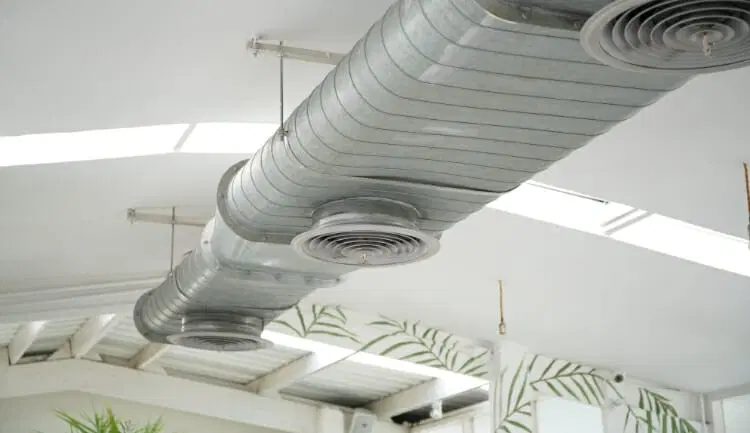
HVAC diffusers are designed to distribute conditioned air evenly into a space. Unlike grilles, diffusers focus on controlling airflow patterns, velocity, and spread to ensure consistent indoor comfort.
Main Functions of Diffusers
- Evenly distribute supply air into occupied spaces
- Improve temperature consistency
- Reduce drafts and airflow discomfort
- Enhance overall HVAC efficiency
Diffusers are essential in environments where occupant comfort and precise air distribution are priorities.
Key Differences Between Grilles and Diffusers
Although they may look similar, grilles and diffusers serve very different purposes in HVAC systems.
1. Airflow Function
- Grilles: Handle air intake or return flow
- Diffusers: Control and distribute supply air
2. Air Distribution Control
- Grilles: Limited airflow direction control
- Diffusers: Designed for precise airflow shaping and dispersion
3. System Role
- Grilles: Support air circulation balance
- Diffusers: Ensure comfort and uniform air distribution
4. Application Focus
- Grilles: Ventilation and return air systems
- Diffusers: Supply air delivery systems
Understanding these differences is essential for proper HVAC system design and performance.
Types of HVAC Grilles and Diffusers
Both components come in different designs to meet various architectural and performance requirements.
Common Types of Grilles
- Fixed blade grilles
- Adjustable blade grilles
- Return air grilles
- Door transfer grilles
Common Types of Diffusers
- Ceiling diffusers
- Linear slot diffusers
- Swirl diffusers
- Jet diffusers
- Floor diffusers
Each type is selected based on airflow needs, room size, and installation location.
Applications in Different Environments
HVAC grilles and diffusers are used in a wide range of settings, each with specific airflow requirements.
Residential Buildings
- Diffusers ensure comfortable airflow in living areas
- Grilles support ventilation in kitchens and bathrooms
Commercial Spaces
- Diffusers provide uniform air distribution in offices and retail stores
- Grilles manage return air and system balance
Industrial Facilities
- Heavy-duty grilles support ventilation systems
- High-capacity diffusers manage large airflow volumes
Healthcare and Hospitality
- Diffusers help maintain controlled and hygienic airflow
- Grilles assist in maintaining ventilation efficiency
Materials and Build Quality
The performance and durability of grilles and diffusers depend heavily on the materials used in their construction.
Common Materials
- Aluminum for lightweight strength and corrosion resistance
- Steel for durability in demanding environments
- Plastic for cost-effective residential applications
High-quality materials ensure long service life and stable performance in various conditions.
Importance of Proper Selection
Choosing the right combination of grilles and diffusers is essential for achieving an efficient HVAC system. Incorrect selection can lead to airflow imbalance, noise issues, and energy inefficiency.
Proper selection helps ensure:
- Balanced air distribution across all zones
- Improved indoor comfort and air quality
- Reduced HVAC system strain
- Better energy efficiency
Role in Energy Efficiency
Well-designed grilles and diffusers contribute significantly to overall HVAC energy performance. Efficient airflow reduces the workload on HVAC systems and helps maintain stable indoor conditions.
Benefits include:
- Lower energy consumption
- Reduced operating costs
- Improved system longevity
- More consistent temperature control
Design and Aesthetic Considerations
In modern architecture, HVAC components are not only functional but also part of interior design. Grilles and diffusers are available in various finishes and styles to match building aesthetics.
Design considerations include:
- Ceiling or wall integration
- Color and surface finish options
- Minimal visual impact for modern interiors
- Custom designs for architectural projects
Conclusion
HVAC grilles and diffusers play a critical role in ensuring efficient airflow, system balance, and indoor comfort. While grilles manage air return and ventilation, diffusers focus on distributing conditioned air evenly throughout a space.
By understanding how hvac grilles and diffusers function and how they differ, designers and engineers can create more efficient, comfortable, and energy-conscious HVAC systems suitable for a wide range of applications.