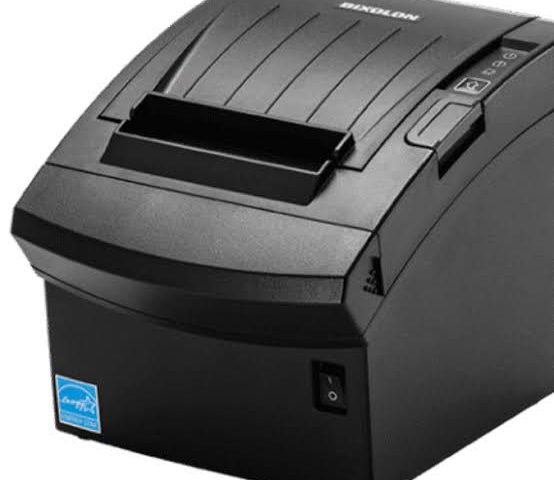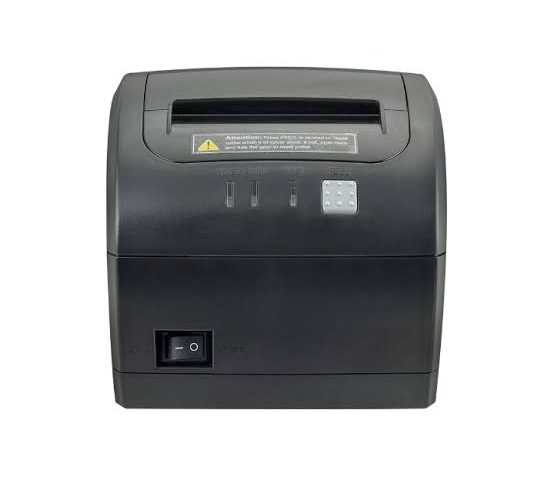
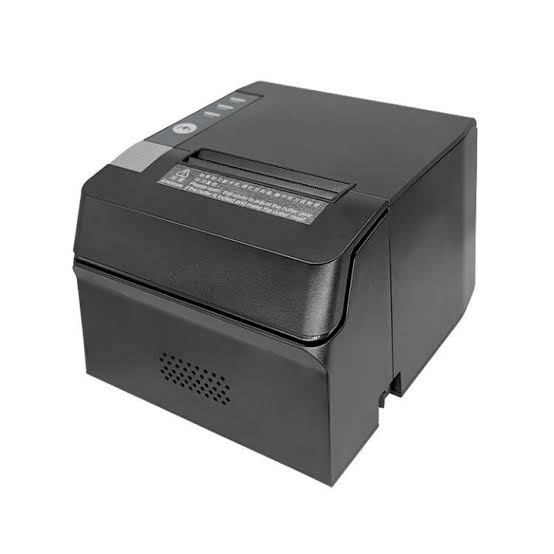
Thermal printing technology continues to evolve as businesses demand faster printing speeds, improved accuracy, better connectivity, and more reliable equipment. From retail receipt printing to industrial labeling and logistics operations, modern applications require printers that can adapt to changing technical and operational needs. Meeting these expectations requires continuous innovation rather than relying exclusively on established product designs.
Research and development (R&D) plays an important role in this process. An experienced Thermal Printer Manufacturer can use research, engineering, and product testing to improve existing equipment and develop solutions for emerging applications. Understanding the value of R&D helps businesses evaluate how manufacturers maintain product performance and respond to changes in the printing industry.
1. Understanding Research and Development in Thermal Printer Manufacturing
Research and development refers to the activities involved in studying technologies, identifying product opportunities, designing improvements, and testing new solutions.
In thermal printer manufacturing, R&D may cover several areas, including mechanical engineering, electronic systems, printhead performance, firmware development, connectivity, and materials.
The process generally begins with identifying a technical problem or market requirement. Engineers then investigate possible solutions, develop prototypes, evaluate their performance, and refine the design before commercial production.
R&D is not limited to creating entirely new products. Improving an existing printer’s reliability, reducing power consumption, or simplifying maintenance can also be important development objectives.
2. Improving Print Quality and Resolution
Print quality is one of the most important characteristics of a thermal printer. Businesses rely on clear text, readable barcodes, and accurate graphics to support daily operations.
Research helps manufacturers improve printhead configurations, heating control, printing algorithms, and media compatibility.
For example, barcode printing applications require consistent image formation because poorly printed codes may become difficult for scanners to read. Manufacturers can investigate how printhead performance, printing speed, and media characteristics affect output quality.
R&D also helps engineers identify the relationship between resolution and practical application requirements. Higher resolution may benefit detailed labels, while standard receipt applications may prioritize speed and readability.
3. Developing Faster and More Efficient Printing Systems
Printing speed influences productivity in environments where large numbers of receipts or labels are generated throughout the day.
Manufacturers use engineering research to examine factors that affect printing performance, including printhead response, data processing, paper movement, and firmware efficiency.
Improvements in these areas can help printers process jobs more effectively and reduce unnecessary delays.
However, faster printing should not come at the expense of output quality or reliable paper feeding. R&D helps manufacturers evaluate these factors together and develop balanced performance improvements.
4. Advancing Thermal Printhead Technology
The thermal printhead is central to the operation of a thermal printer. It contains heating elements that generate controlled heat patterns to produce images on compatible printing media.
Research into printhead technology can focus on heating accuracy, energy efficiency, wear resistance, and consistent performance.
Manufacturers may evaluate different printhead configurations and control methods to improve printing results under varying operating conditions.
The relationship between printhead quality and media selection is also important. Suitable combinations can help reduce printing defects and support dependable operation.
Because the printhead is a critical component, improvements in its design and control can contribute significantly to overall printer performance.
5. Improving Printer Durability and Reliability
Thermal printers are often used in environments where equipment operates repeatedly throughout the working day.
Retail checkout counters, warehouses, production facilities, and delivery operations may place considerable demands on printing devices.
R&D helps manufacturers investigate common causes of wear and equipment failure. These may include mechanical stress, heat exposure, dust accumulation, component degradation, and frequent paper handling.
Engineers can use testing and design improvements to strengthen vulnerable areas, improve component protection, and reduce unnecessary mechanical complexity.
The objective is to develop printers that maintain consistent performance throughout their expected operating life.
6. Enhancing Connectivity and Device Compatibility
Modern thermal printers need to communicate with different business systems and electronic devices.
Depending on the product model, connectivity options may include USB, Ethernet, serial interfaces, Bluetooth, and Wi-Fi.
Research and software development help manufacturers improve communication reliability and compatibility with different operating environments.
Important development areas may include:
- More reliable wireless communication
- Improved connection stability
- Better driver compatibility
- Easier device configuration
- Enhanced communication protocols
- Simplified integration with POS systems
These improvements can make thermal printers easier to deploy across retail, hospitality, logistics, and other business environments.
7. Supporting Software and Firmware Innovation
Hardware performance alone does not determine how effectively a thermal printer operates. Firmware and software also influence printing behavior, device configuration, and communication with connected systems.
R&D teams can develop firmware improvements that optimize printing commands, error handling, device settings, and communication functions.
Software development may also involve printer drivers, SDKs, configuration tools, and integration documentation.
For businesses using customized printing applications, these developments can simplify deployment and reduce compatibility problems.
Continuous software maintenance is equally important because operating systems, applications, and connected devices may change over time.
8. Exploring Energy-Efficient Printing Technologies
Energy efficiency has become an important consideration in electronic product development.
Thermal printer manufacturers can use R&D to investigate power management, electronic circuit efficiency, and heating control methods.
For example, optimizing how power is supplied to printing elements may help reduce unnecessary energy consumption under suitable operating conditions.
Engineers may also evaluate standby power requirements and the performance of different power supply configurations.
Energy improvements should be assessed alongside printing speed, output quality, and component reliability. A successful design needs to balance these requirements rather than focusing on power consumption alone.
9. Developing More Compact and Practical Printer Designs
Many businesses need printing equipment that fits into limited working spaces.
Retail counters, mobile service stations, kiosks, and compact work areas may have specific size and installation requirements.
R&D allows engineers to explore more efficient internal layouts, smaller electronic components, improved mechanical arrangements, and practical housing designs.
Compact printers must still provide adequate heat management, paper handling, accessibility, and component protection.
Research helps manufacturers balance space-saving designs with the functional requirements of different applications.
10. Improving Paper Handling and Mechanical Performance
Paper feeding is another important area of thermal printer research.
Problems such as paper misalignment, jams, uneven feeding, and inconsistent cutting can interrupt business operations.
Manufacturers can investigate roller design, paper path geometry, sensor placement, cutter mechanisms, and mechanical tolerances to improve performance.
For label printers, media detection and alignment are particularly important because inaccurate feeding can affect label positioning and barcode readability.
By testing different materials and operating conditions, engineers can identify design improvements that support smoother paper handling.
11. Developing Solutions for Different Industry Applications
Different industries have different printing requirements. A receipt printer designed for a small retail counter may not be suitable for an industrial labeling environment.
R&D helps manufacturers understand these differences and develop products for specific applications.
Retail and Point-of-Sale Systems
Retail businesses commonly need fast receipt printing, dependable paper feeding, and compatibility with POS software.
Logistics and Warehousing
Logistics operations often require barcode and shipping label printing, reliable media handling, and integration with inventory systems.
Healthcare
Healthcare applications may require clear patient identification labels, dependable printing, and compatibility with information management systems.
Manufacturing
Manufacturing facilities may use thermal printers for product identification, inventory tracking, and production-related labeling.
Research into these applications helps manufacturers develop equipment that addresses practical industry requirements.
12. Strengthening Product Testing and Quality Assurance
Research and development also contributes to quality assurance by helping manufacturers establish more effective testing procedures.
During product development, engineers may evaluate performance under different operating conditions and identify weaknesses before a printer enters mass production.
Testing may cover:
- Print quality and consistency
- Printing speed
- Paper-feeding accuracy
- Cutter performance
- Connectivity stability
- Temperature-related performance
- Power supply behavior
- Mechanical durability
The findings can be used to refine product designs and improve manufacturing specifications.
A strong connection between R&D and quality control helps manufacturers identify problems earlier, reducing the possibility of recurring defects in finished products.
13. Encouraging Customization and OEM Product Development
OEM and private label customers may have requirements that differ from standard printer configurations.
Some businesses need specific housing designs, interface combinations, firmware settings, or printing functions to support their applications.
R&D provides the technical foundation for evaluating and implementing these changes.
The development process may involve requirement analysis, engineering design, prototype production, sample testing, and final specification approval.
Manufacturers with suitable R&D capabilities can help customers assess whether requested modifications are technically practical and commercially reasonable.
This support is particularly valuable when businesses need specialized products for particular markets or operating environments.
14. Responding to Changing Market Requirements
Customer expectations and business technologies continue to change.
For example, the expansion of e-commerce has increased the importance of shipping labels and inventory identification. Mobile business operations have also created demand for compact printers with wireless communication capabilities.
R&D helps manufacturers monitor these changes and identify opportunities for product development.
Market research, customer feedback, competitor analysis, and industry discussions can provide useful information about emerging requirements.
By connecting market research with engineering development, manufacturers can prioritize improvements that offer practical value rather than introducing features without a clear application.
15. Supporting Sustainability Through Product Development
Environmental considerations are becoming increasingly relevant to electronic equipment manufacturing.
R&D can support sustainability by exploring material efficiency, reduced energy consumption, longer product life, and improved manufacturing processes.
Potential development areas include:
- Reducing unnecessary material use
- Improving component durability
- Designing products that are easier to maintain
- Optimizing manufacturing waste
- Evaluating recyclable packaging
- Improving power efficiency
Thermal printing also involves consumables such as paper, labels, and ribbons for thermal transfer applications. Product development can consider how printers work with different media types and how operational efficiency may reduce avoidable waste.
Sustainability improvements should be supported by measurable performance information rather than broad environmental claims.
16. Using Digital Tools in Research and Development
Digital engineering tools can improve the efficiency of thermal printer development.
Computer-aided design (CAD) software helps engineers create and refine product structures. Simulation tools may help evaluate mechanical behavior, heat distribution, and other design characteristics before physical prototypes are produced.
Firmware development environments and automated testing systems can also help engineers identify software problems more efficiently.
These tools do not replace physical product testing, but they can help reduce development uncertainty and improve the evaluation process.
Combining digital analysis with practical testing allows manufacturers to make more informed engineering decisions.
17. Reducing Long-Term Product Development Risks
Developing a new printer or modifying an existing model involves technical and commercial risks.
A design may perform well in an initial demonstration but encounter problems during extended operation or integration with customer systems.
R&D helps reduce these risks through structured evaluation and repeated testing.
Manufacturers can identify potential issues before mass production, assess alternative components, and verify that the proposed design meets its intended requirements.
Early problem identification is generally less expensive than correcting widespread issues after products have reached customers.
A systematic development process can therefore improve both product quality and project planning.
18. The Importance of Skilled Engineering Teams
Effective R&D depends on the knowledge and experience of the people conducting the work.
Thermal printer development may require expertise in electronics, mechanical design, firmware, software integration, materials, and product testing.
Engineers from different disciplines often need to collaborate because changes in one area can affect other parts of the product.
For example, modifying a printer’s housing may influence heat management, paper access, component positioning, and assembly procedures.
A coordinated engineering team can evaluate these relationships and develop solutions that work across the complete product system.
19. How Businesses Can Evaluate a Manufacturer’s R&D Capabilities
Businesses purchasing thermal printers should consider more than product specifications and quoted prices.
A manufacturer’s development capabilities can influence its ability to maintain products, introduce improvements, and support customized requirements.
Useful evaluation questions include:
- Does the manufacturer have an in-house engineering or product development team?
- What types of product improvements has it developed?
- Can it support hardware and firmware customization?
- Does it provide prototypes before mass production?
- What testing procedures are used during product development?
- How does it collect and evaluate customer feedback?
- Can it provide technical documentation and integration support?
- How are product changes tested and approved?
Businesses should request relevant technical information and evaluate samples where possible. This provides a more practical understanding of the manufacturer’s capabilities than relying only on general claims.
20. Future Research and Development Trends in Thermal Printing
The future of thermal printer development is likely to involve improvements in connectivity, automation, reliability, and integration with business technology.
Several areas may receive continued attention:
- Smarter connectivity: Better integration with cloud-based business platforms and connected devices.
- Improved automation: More efficient printer configuration, monitoring, and error reporting.
- Enhanced mobile printing: Compact equipment with improved wireless communication.
- Advanced materials: Better compatibility with specialized paper and label media.
- Energy management: More efficient electronic systems and power control.
- Software integration: Improved support for modern operating systems and business applications.
- Predictive maintenance: Greater use of operational data to identify potential equipment problems.
The commercial adoption of these developments will depend on customer demand, technical feasibility, manufacturing costs, and compatibility with existing systems.
Conclusion
Research and development is essential to the continued improvement of thermal printer manufacturing. It helps manufacturers enhance print quality, increase reliability, improve connectivity, develop efficient designs, and create products for different industry applications.
R&D also supports OEM customization, software compatibility, product testing, and sustainability initiatives. For businesses selecting printing equipment, evaluating a manufacturer’s engineering and development capabilities can provide useful insight into its ability to support long-term product requirements. As printing applications evolve, continuous research will remain an important part of developing practical and dependable thermal printing solutions.