Modern electronic devices rely on carefully designed circuits that control electrical signals, manage power, process information, and perform specific functions. From smartphones and computers to industrial machinery and automotive control systems, every electronic product contains components that work together to achieve reliable operation. Understanding these components and their functions is essential for engineers, manufacturers, technicians, and anyone involved in electronic circuit design.
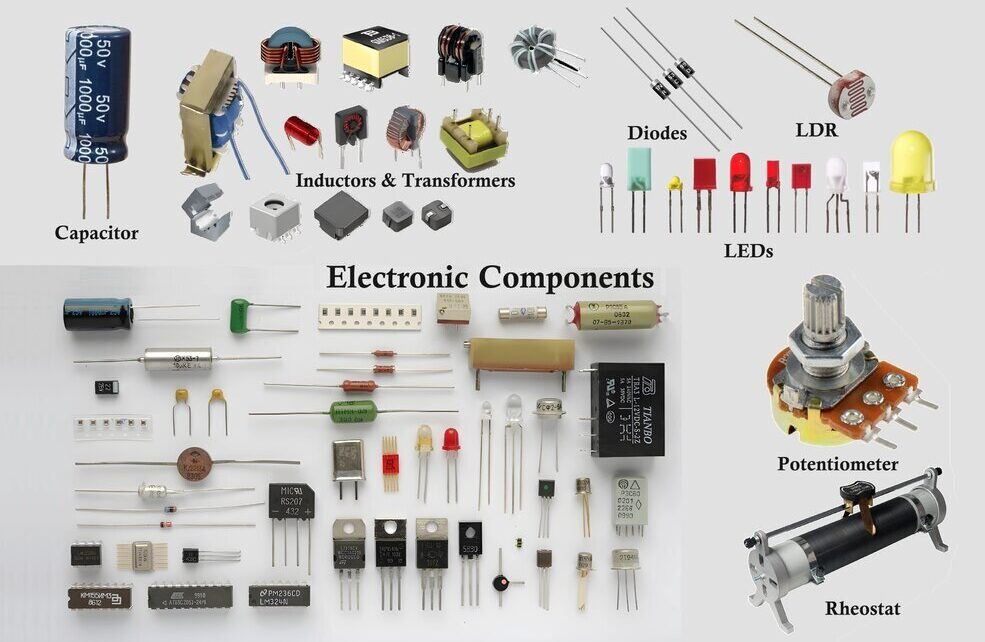
At the center of every circuit are individual parts that regulate current, store energy, amplify signals, and protect sensitive equipment. Selecting suitable Electronic Components is an important step in developing circuits that meet performance, efficiency, and safety requirements. Each component has specific electrical characteristics, and combining them correctly allows designers to create everything from simple control circuits to sophisticated electronic systems.
What Are Electronic Components?
Electronic components are individual devices used to build electrical and electronic circuits. They perform specific functions by controlling the movement of electrical current and signals through a circuit.
These components are generally divided into two main categories:
- Passive components: Parts that do not provide power gain or require an external power source to perform their basic circuit functions. Examples include resistors, capacitors, and inductors.
- Active components: Parts that can control electrical signals, amplify current or voltage, or perform switching functions. Examples include transistors, integrated circuits, and diodes.
Both categories are essential in modern circuit design. Passive components establish operating conditions and manage energy, while active components provide control, amplification, and processing capabilities.
1. Resistors and Their Functions
<AsyncImage query=”electronic through hole resistors assortment on white background” aspectRatio=”16:9″ maxHeight={190}/>
Resistors are among the most commonly used components in electronic circuits. Their primary function is to limit or regulate the flow of electrical current.
They are used in voltage dividers, current-limiting circuits, signal conditioning, and biasing arrangements.
Main Functions of Resistors
- Current limiting: Protect LEDs and other sensitive components from excessive current.
- Voltage division: Produce a required voltage level from a higher input voltage.
- Biasing: Establish suitable operating conditions for transistors and other active devices.
- Signal control: Help manage signal levels in electronic circuits.
Different resistor types include carbon film, metal film, wirewound, and surface-mount resistors. The appropriate type depends on resistance value, power rating, tolerance, and operating conditions.
2. Capacitors and Energy Storage
<AsyncImage query=”electronic capacitors ceramic electrolytic film components assortment” aspectRatio=”16:9″ maxHeight={190}/>
Capacitors store electrical energy in an electric field and release it when required. They are widely used in circuits that require filtering, timing, coupling, and voltage stabilization.
Common Capacitor Applications
- Power supply filtering: Reduce unwanted voltage fluctuations and ripple.
- Decoupling: Help stabilize voltage near integrated circuits.
- Signal coupling: Allow changing signals to pass while blocking steady DC components.
- Timing circuits: Work with resistors to establish charging and discharging intervals.
- Energy storage: Temporarily store electrical energy for circuit operation.
Common capacitor types include ceramic, electrolytic, tantalum, and film capacitors. Each type has different capacitance, voltage, frequency, and temperature characteristics.
3. Inductors and Magnetic Energy Storage
<AsyncImage query=”electronic inductors ferrite core copper coil components” aspectRatio=”16:9″ maxHeight={190}/>
Inductors store energy in a magnetic field when electrical current passes through their windings. They oppose changes in current and play an important role in power conversion and signal filtering.
Main Functions of Inductors
- Filtering electrical noise from power and signal lines.
- Storing energy in switching power supplies.
- Supporting voltage conversion in DC-DC converters.
- Forming resonant circuits with capacitors.
- Reducing electromagnetic interference in electronic systems.
Inductors are available in different constructions, including air-core, iron-core, and ferrite-core designs. Selection depends on inductance, current rating, frequency, and saturation characteristics.
4. Diodes and Current Direction Control
<AsyncImage query=”electronic semiconductor diodes rectifier switching zener assortment” aspectRatio=”16:9″ maxHeight={190}/>
A diode is a semiconductor component that primarily allows current to flow in one direction while restricting it in the opposite direction under normal operating conditions.
Diodes are essential in rectification, voltage regulation, signal processing, and circuit protection.
Common Types of Diodes
- Rectifier diodes: Convert alternating current into pulsating direct current.
- Zener diodes: Provide voltage regulation or reference functions in reverse breakdown operation.
- Schottky diodes: Offer relatively low forward voltage drop and fast switching characteristics.
- LEDs: Produce light when forward current flows through them.
- TVS diodes: Help protect circuits against transient voltage surges.
Choosing a diode requires considering its forward current, reverse voltage, switching speed, power dissipation, and intended application.
5. Transistors for Switching and Amplification
<AsyncImage query=”electronic transistors TO92 TO220 MOSFET semiconductor components” aspectRatio=”16:9″ maxHeight={190}/>
Transistors are active semiconductor devices used to control electrical current. They can function as electronic switches or amplifiers, making them essential in digital and analog circuit design.
Main Transistor Applications
- Switching power to electronic loads.
- Amplifying audio and radio-frequency signals.
- Controlling motors and lighting systems.
- Regulating power in electronic circuits.
- Processing signals in communication equipment.
Common transistor categories include bipolar junction transistors (BJTs), metal-oxide-semiconductor field-effect transistors (MOSFETs), and insulated-gate bipolar transistors (IGBTs).
Each type has different characteristics related to current handling, switching speed, voltage requirements, and power efficiency.
6. Integrated Circuits for Complex Functions
<AsyncImage query=”integrated circuit chips microcontrollers operational amplifiers electronic PCB” aspectRatio=”16:9″ maxHeight={190}/>
Integrated circuits (ICs) contain multiple electronic components manufactured together on a semiconductor substrate. They perform complex functions while reducing circuit size and the number of separate components required.
Common Integrated Circuit Applications
- Microcontrollers for embedded systems.
- Microprocessors for computing and data processing.
- Operational amplifiers for signal conditioning.
- Memory chips for storing information.
- Voltage regulators for power management.
- Communication ICs for data transmission.
Integrated circuits are widely used in computers, smartphones, industrial controllers, medical devices, and automotive electronics.
7. Thermistors for Temperature Measurement and Protection
<AsyncImage query=”NTC thermistor temperature sensor electronic components bead and radial types” aspectRatio=”16:9″ maxHeight={190}/>
Thermistors are temperature-sensitive resistors whose electrical resistance changes according to temperature. They are commonly used for thermal monitoring, temperature regulation, and circuit protection.
There are two primary types:
- NTC thermistors: Resistance decreases as temperature increases.
- PTC thermistors: Resistance increases as temperature increases.
NTC thermistors are frequently used in digital thermometers, battery management systems, household appliances, and inrush current limiting circuits. PTC thermistors are used in certain overcurrent protection and temperature-dependent switching applications.
Their sensitivity and compact construction make thermistors useful in electronic equipment that requires dependable temperature feedback.
8. Switches and Connectors
<AsyncImage query=”electronic switches push buttons toggle switches PCB connectors assortment” aspectRatio=”16:9″ maxHeight={190}/>
Switches and connectors provide essential control and electrical connections within electronic systems.
Switches
Switches open or close electrical circuits to control current flow. Common types include push-button switches, toggle switches, slide switches, and rotary switches.
They are used in power controls, user interfaces, equipment operation, and safety mechanisms.
Connectors
Connectors establish electrical connections between circuit boards, cables, sensors, and external devices. Common examples include terminal blocks, USB connectors, pin headers, and board-to-board connectors.
Reliable connectors help maintain electrical continuity and simplify installation, maintenance, and equipment replacement.
9. Relays for Electrical Control
<AsyncImage query=”electromechanical PCB relays electronic components assortment” aspectRatio=”16:9″ maxHeight={190}/>
Relays are electrically operated switches that allow a low-power control signal to operate a separate electrical circuit.
They are commonly used when a control system needs to switch higher-power loads or maintain electrical isolation between control and load circuits.
Typical applications include:
- Motor control systems.
- Industrial automation equipment.
- Lighting control.
- Heating systems.
- Automotive electrical circuits.
Electromechanical relays use moving contacts, while solid-state relays use semiconductor switching devices.
10. Fuses and Circuit Protection Components
<AsyncImage query=”electronic cartridge fuses resettable PTC fuse circuit protection components” aspectRatio=”16:9″ maxHeight={190}/>
Circuit protection components help prevent electrical faults from damaging equipment or creating unsafe conditions.
Fuses interrupt current when it exceeds a specified limit. Other protection components include resettable PTC devices, transient voltage suppressors, and varistors.
Main Protection Functions
- Limiting damage caused by excessive current.
- Protecting against short circuits.
- Reducing the effects of voltage surges.
- Supporting safer operation of electronic equipment.
- Protecting sensitive semiconductor devices.
The appropriate protection method depends on circuit voltage, current, fault conditions, and required response time.
How Electronic Components Work Together in Circuit Design
Individual components perform specific tasks, but their combined operation determines how an electronic circuit functions.
For example, a basic regulated power supply may contain several different component types:
- A transformer adjusts the AC voltage when required by the design.
- Rectifier diodes convert AC into pulsating DC.
- Capacitors smooth the rectified voltage.
- A voltage regulator maintains a suitable output level.
- Resistors establish operating conditions and control current.
- Protection components help reduce the risk of electrical damage.
Similarly, a temperature monitoring circuit may combine an NTC thermistor, fixed resistor, microcontroller, and display. The thermistor detects temperature changes, the resistor forms a measurement circuit, and the microcontroller processes the signal to display or control the measured temperature.
This illustrates why understanding component characteristics and circuit relationships is important for reliable electronic design.
Factors to Consider When Selecting Electronic Components
Choosing suitable components is essential for achieving the required circuit performance and long-term reliability.
| Selection Factor | What to Evaluate |
|---|---|
| Electrical ratings | Operating voltage, current, and power limits |
| Component tolerance | Permitted variation from specified values |
| Operating temperature | Expected minimum and maximum temperatures |
| Frequency response | Suitability for the circuit’s signal frequency |
| Physical size | Compatibility with PCB layout and enclosure |
| Reliability | Expected operating life and failure characteristics |
| Environmental conditions | Exposure to moisture, vibration, and dust |
| Availability | Consistent sourcing and future replacement options |
Engineers should also consider component compatibility, manufacturing requirements, applicable safety standards, and total system cost.
Importance of Quality in Modern Circuit Design
Component quality has a direct influence on the reliability and performance of electronic equipment. Poor-quality parts may have inconsistent electrical characteristics, shorter operating lifespans, or reduced resistance to environmental stress.
Using components that meet the required specifications helps manufacturers achieve:
- More consistent circuit performance.
- Better thermal and electrical stability.
- Lower risk of unexpected failures.
- Improved equipment durability.
- Easier maintenance and replacement.
- More predictable manufacturing results.
Working with dependable suppliers and reviewing technical datasheets can help engineers verify that components are suitable for their intended applications.
Conclusion
Electronic components form the foundation of modern circuit design. Resistors, capacitors, inductors, diodes, transistors, integrated circuits, thermistors, switches, relays, and protection devices each perform important functions that allow electronic systems to operate effectively.
Understanding their electrical characteristics and how they work together helps engineers develop circuits that are efficient, reliable, and safe. By selecting suitable components according to voltage, current, temperature, tolerance, and application requirements, manufacturers can create dependable electronic products for consumer, industrial, automotive, and communication applications.