
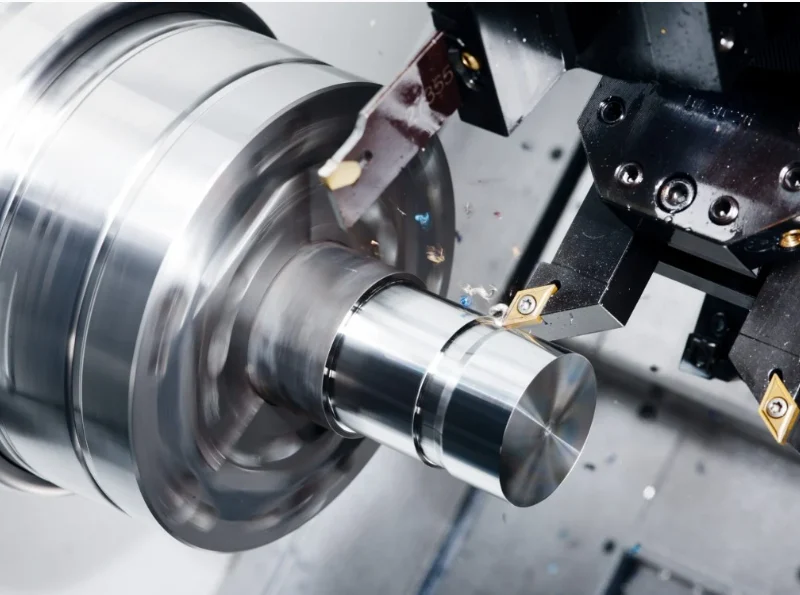
Choosing the right CNC equipment is an important decision for manufacturers because the quality of the machine can directly affect productivity, machining accuracy, operating costs, and long-term reliability. A careful evaluation is especially important when the equipment will be used for continuous or precision-focused production.
When comparing a CNC Lathe Machine Manufacturer, buyers should look beyond the machine’s basic specifications and consider factors such as construction quality, technical capabilities, customization options, service support, and overall value. JSWAY is one company operating in the CNC machinery sector, but manufacturers should evaluate suppliers according to their own production requirements.
Assess Manufacturing Experience
Industry experience can provide useful insight into a manufacturer’s technical capabilities and understanding of machining requirements.
A manufacturer with established experience in CNC turning is more likely to understand common production challenges involving tooling, workholding, machine rigidity, thermal stability, and process optimization.
However, experience should be considered alongside current technology and manufacturing capabilities rather than used as the only selection criterion.
Examine Machine Construction
The physical construction of a CNC lathe plays an important role in its performance.
Important areas to evaluate include:
- Machine bed design
- Structural rigidity
- Guideway construction
- Spindle housing
- Turret design
- Ballscrew support
- Overall component quality
A rigid machine structure can help reduce vibration and maintain stable cutting conditions, particularly during demanding machining operations.
Review Spindle Specifications
The spindle is one of the most important components of a CNC lathe.
When comparing machines, examine spindle speed, motor power, torque characteristics, bearing configuration, and spindle capacity.
The appropriate spindle specification depends on the materials being machined and the type of components being produced. High-speed machining and heavy-duty turning may require different spindle characteristics.
Consider Machine Accuracy
Accuracy and repeatability are essential when producing components with tight dimensional requirements.
Manufacturers should provide clear information about positioning accuracy, repeatability, machine calibration, and quality-control procedures.
It is also useful to understand how accuracy is maintained over time because machine performance depends on maintenance, environmental conditions, tooling, and operating practices.
Evaluate CNC Control Systems
The CNC controller serves as the operating interface between the machining program and the machine’s mechanical systems.
A suitable control system should provide reliable operation, straightforward programming, useful diagnostic functions, and compatibility with the manufacturer’s production workflow.
For shops using advanced programming or connected manufacturing systems, communication and data-management capabilities may also be important.
Check Available Machine Configurations
Different production requirements call for different CNC lathe configurations.
Depending on the application, manufacturers may need:
- Two-axis CNC lathes
- Turning centers
- Live-tooling machines
- Y-axis configurations
- Twin-spindle machines
- Automatic bar-fed systems
- Multi-tasking equipment
A good manufacturer should offer configurations that align with the types of components and machining operations the customer needs to perform.
Look at Customization Options
Standard machines may not always provide the ideal solution for specialized manufacturing.
Customization can include different spindle configurations, tooling arrangements, workholding systems, automation equipment, chip management solutions, or other production-specific features.
Before selecting a manufacturer, determine whether it can accommodate reasonable modifications without creating unnecessary complexity.
Investigate Automation Compatibility
Automation is increasingly important in modern CNC production.
If the goal is to improve machine utilization, ask whether the equipment can integrate with bar feeders, robotic loaders, automatic part collection, tool measurement systems, or inspection equipment.
Automation compatibility can make a significant difference for manufacturers planning to expand production in the future.
Review Quality-Control Procedures
A reliable CNC manufacturer should have clearly defined quality-control processes.
Ask how machines are inspected and tested before shipment. Depending on the equipment, this may include dimensional checks, spindle testing, positioning verification, trial machining, and other performance evaluations.
Strong quality control can reduce the risk of receiving equipment that requires extensive adjustment before entering production.
Evaluate Technical Support
Purchasing a CNC lathe is not simply a one-time transaction. Technical support can remain important throughout the machine’s operating life.
Consider whether the manufacturer provides assistance with:
- Installation
- Machine commissioning
- Programming
- Operator training
- Troubleshooting
- Maintenance
- Replacement components
Accessible technical support can help reduce downtime when problems occur.
Ask About Spare Parts Availability
The availability of replacement components should be considered before purchasing a CNC machine.
Critical parts such as sensors, electrical components, bearings, tooling-related components, and other machine-specific items may eventually require replacement.
A manufacturer with an organized spare-parts system can make maintenance and repairs more manageable.
Consider Operator Training
Even a technically advanced machine requires properly trained personnel.
Manufacturers that provide operator and maintenance training can help customers understand machine functions, programming procedures, safety practices, and routine maintenance.
Training can also shorten the learning curve when new equipment is introduced into an existing production environment.
Compare Energy Efficiency
Operating costs extend beyond tooling and labor.
Spindle motors, coolant systems, hydraulic equipment, chip conveyors, and auxiliary components all consume energy.
When comparing machines, consider whether the equipment includes efficient drive systems or functions that reduce energy consumption during idle periods.
Lower energy usage can contribute to reduced operating costs over the machine’s service life.
Examine Maintenance Requirements
Maintenance should be practical and clearly understood before purchasing equipment.
Review lubrication requirements, access to service points, coolant maintenance, filtration systems, and recommended inspection intervals.
A machine that is easier to maintain can help reduce service interruptions and support more consistent long-term performance.
Consider Total Cost of Ownership
Purchase price is only one part of the overall investment.
Manufacturers should consider:
- Initial machine cost
- Installation expenses
- Tooling and workholding
- Automation equipment
- Energy consumption
- Maintenance
- Spare parts
- Training
- Downtime
- Expected service life
Evaluating these factors provides a more realistic picture of the machine’s long-term value.
Review Customer Feedback
Customer experiences can provide additional insight into machine reliability and manufacturer support.
Look for feedback related to machine performance, delivery, technical assistance, parts availability, and long-term reliability.
It is useful to compare feedback from businesses with similar production requirements rather than relying exclusively on general reviews.
Check Delivery and Installation Support
The purchasing process should include a clear understanding of delivery, installation, commissioning, and acceptance procedures.
Ask who is responsible for transportation, installation, machine leveling, electrical connections, testing, and operator training.
Clear responsibilities can prevent confusion when the equipment arrives at the facility.
Assess Future Upgrade Potential
Manufacturing requirements can change over time.
A CNC lathe that supports future upgrades or additional automation may provide greater flexibility than a machine designed only for the current production process.
Consider whether the machine can accommodate additional tooling, automated handling, software improvements, or other technologies as production needs develop.
Ask the Right Questions Before Buying
Before making a final decision, manufacturers should ask suppliers specific questions about the equipment and support services.
Useful questions include:
- What materials is the machine designed to process?
- What tolerances can it reliably maintain?
- What spindle and tooling options are available?
- Can the machine support automation?
- What training is included?
- How are spare parts supplied?
- What maintenance is required?
- What technical support is available after installation?
- Can the machine be customized for specific production needs?
Clear answers can make supplier comparisons much easier.
Why Manufacturer Selection Matters
The manufacturer influences more than the initial machine purchase. Engineering quality, documentation, technical support, spare-parts availability, and after-sales service can all affect the machine’s productivity throughout its working life.
For this reason, manufacturers should evaluate both the equipment and the supplier behind it.
Final Thoughts
Selecting a CNC lathe machine manufacturer requires a balanced evaluation of machine quality, technical specifications, reliability, support, maintenance, and long-term operating costs.
The best choice is not necessarily the manufacturer offering the lowest initial price. Instead, manufacturers should look for equipment that matches their production requirements and comes with dependable technical and service support.
A thorough comparison before purchase can help businesses invest in CNC turning equipment that delivers consistent performance, efficient production, and sustainable value over the long term.

