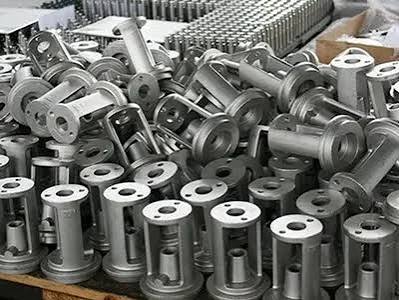
Selecting a suitable casting supplier is an important decision for businesses that depend on reliable metal components. Whether the requirement involves automotive parts, construction machinery components, industrial equipment housings, or agricultural machinery, the manufacturer’s production capabilities directly influence product quality, delivery schedules, and overall project costs.
Evaluating a supplier involves more than checking its equipment or production capacity. Buyers should also examine material expertise, casting processes, engineering support, machining facilities, and quality control procedures. Working with an experienced Iron Castings Manufacturer can help businesses obtain components that meet their technical specifications and intended operating requirements. A structured evaluation process makes it easier to identify a manufacturer capable of supporting both current orders and future production needs.
1. Examine the Manufacturer’s Casting Process Capabilities
The first step is to understand which casting processes the manufacturer can perform. Different production methods are suitable for different component sizes, shapes, material grades, and order quantities.
Sand casting is commonly used for iron components because it can accommodate complex geometries and a wide range of casting sizes. Other processes may be appropriate for specific product requirements.
Ask the manufacturer about:
- Available casting methods.
- Maximum and minimum casting dimensions.
- Weight range of components.
- Mold and core-making capabilities.
- Production capacity for different casting types.
- Experience with complex component geometries.
A supplier’s process capabilities should match the technical demands of the parts being sourced. Having suitable production methods helps reduce design limitations and manufacturing complications.
2. Evaluate Material Expertise and Grade Availability
Iron castings are produced in several material grades, each offering different mechanical and physical properties. Gray iron and ductile iron are widely used, while other specialized grades may be required for particular applications.
A capable manufacturer should understand how material composition and microstructure affect strength, hardness, machinability, wear resistance, and casting performance.
When evaluating material expertise, consider whether the supplier can:
- Produce the required iron grades.
- Control chemical composition during melting.
- Understand relevant material standards.
- Recommend materials based on operating conditions.
- Verify material properties through testing.
- Maintain consistency between production batches.
The supplier should be able to explain why a particular grade is suitable for the component rather than simply offering a material based on availability.
3. Check Melting and Furnace Equipment
<AsyncImage query=”industrial iron foundry induction melting furnace molten metal production” aspectRatio=”16:9″ width=”100%”/>
Melting equipment plays an important role in maintaining consistent metal quality. Furnace performance affects temperature control, production efficiency, and the ability to prepare molten iron with the required chemical composition.
Induction furnaces are commonly used in modern foundries because they provide controlled heating and can support different production requirements.
During supplier evaluation, ask about:
- Types and capacities of melting furnaces.
- Temperature monitoring systems.
- Chemical composition testing equipment.
- Metal treatment procedures.
- Furnace maintenance schedules.
- Methods for controlling molten metal quality.
Reliable melting operations help establish consistent conditions before the metal enters the mold.
4. Assess Pattern and Mold-Making Capabilities
Pattern and mold quality directly influence the dimensions, surface finish, and overall accuracy of an iron casting. Poor pattern design or unstable molds can lead to defects, dimensional variations, and production delays.
A manufacturer should have suitable facilities and technical knowledge for producing patterns, molds, and cores according to the component design.
Important points to review include:
- Pattern-making equipment and materials.
- Mold preparation procedures.
- Core-making capabilities.
- Mold strength and permeability controls.
- Pattern storage and maintenance.
- Experience with complicated internal features.
Advanced pattern development tools, including CAD-based design systems, can improve accuracy and make design modifications easier.
5. Review Engineering and Design Support
Engineering support is particularly important when manufacturing customized iron castings. A supplier should be able to review technical drawings, identify potential production difficulties, and suggest practical improvements.
For example, certain wall thicknesses or sharp transitions may create problems during mold filling and solidification. An experienced engineering team can identify these risks before production begins.
Useful engineering capabilities include:
- CAD modeling and drawing interpretation.
- Casting design review.
- Gating and riser design.
- Casting simulation.
- Material recommendations.
- Machining allowance planning.
- Prototype and sample development.
Strong engineering support can reduce unnecessary revisions and help make the component easier to manufacture without compromising its required function.
6. Determine Whether the Manufacturer Uses Casting Simulation
<AsyncImage query=”metal casting simulation software computer analysis foundry engineering” aspectRatio=”16:9″ width=”100%”/>
Casting simulation software helps engineers study molten metal flow, mold filling, and solidification behavior before beginning production.
This technology can help identify potential issues such as shrinkage cavities, incomplete mold filling, and uneven cooling. Engineers can then modify the design or production parameters to reduce the likelihood of defects.
When reviewing a manufacturer’s technical capabilities, ask whether simulation is available and how the results are used during production planning.
Simulation is particularly useful for complex or high-value components. However, it should complement practical manufacturing experience and physical inspection rather than replace them.
7. Inspect Production Capacity and Manufacturing Scale
Production capacity determines whether a supplier can handle the required order volume within an acceptable timeframe. A manufacturer may be suitable for prototype development but lack the resources needed for large-scale production.
Buyers should evaluate both equipment capacity and the manufacturer’s ability to organize production efficiently.
Consider the following factors:
- Monthly or annual production capacity.
- Number and size of available furnaces.
- Molding line capabilities.
- Labor and technical resources.
- Production planning procedures.
- Ability to manage urgent or repeat orders.
- Experience handling similar order volumes.
It is also important to understand whether the manufacturer has enough capacity to accommodate future demand without affecting existing delivery commitments.
8. Evaluate Machining and Finishing Facilities
<AsyncImage query=”CNC machining center industrial cast iron component milling manufacturing” aspectRatio=”16:9″ width=”100%”/>
Many iron castings require additional machining before they can be installed in machinery or industrial assemblies. These operations may include milling, drilling, turning, boring, and surface finishing.
A manufacturer with in-house machining capabilities may provide better coordination between casting production and final component processing.
Evaluate whether the supplier has:
- CNC machining centers.
- Turning and milling equipment.
- Drilling and boring facilities.
- Suitable measuring instruments.
- Surface finishing capabilities.
- Experience machining the required iron grades.
Ask how machining tolerances are verified and whether finished components are inspected against customer drawings.
If machining is outsourced, clarify how the manufacturer manages subcontractor quality and delivery schedules.
9. Examine Quality Control and Inspection Systems
Quality control is one of the most important factors when evaluating an iron casting supplier. Even a manufacturer with advanced equipment may produce inconsistent components without effective inspection procedures.
A structured quality system should cover raw materials, melting, molding, casting, machining, and final delivery.
Common inspection methods include:
- Chemical composition analysis.
- Hardness testing.
- Tensile testing when specified.
- Metallographic examination.
- Dimensional measurement.
- Visual surface inspection.
- Non-destructive testing where required.
Ask for sample inspection reports and information about how nonconforming products are handled. A reliable supplier should be able to explain its inspection procedures and provide documentation that supports product compliance.
10. Review Certifications and Industry Standards
Certifications and compliance documentation can provide useful information about a manufacturer’s quality management practices. However, buyers should verify that any claimed certification is current and relevant to the manufacturing operation.
Depending on the industry and customer requirements, relevant standards may cover quality management, material specifications, testing procedures, and dimensional tolerances.
When reviewing documentation, check:
- Whether the certification applies to the actual manufacturing facility.
- Its validity and issuing organization.
- The scope of certified activities.
- Material standards followed during production.
- Inspection and testing documentation.
- Traceability procedures.
For specialized industrial applications, additional customer-specific or industry-specific requirements may apply.
11. Investigate Raw Material Sourcing and Traceability
The quality of raw materials has a direct influence on the final casting. Variations in charge materials can affect chemical composition, microstructure, and mechanical performance.
A manufacturer should have procedures for selecting, checking, and controlling incoming materials.
Ask how the supplier manages:
- Pig iron and steel scrap selection.
- Alloying element procurement.
- Incoming material inspection.
- Material storage and segregation.
- Chemical composition verification.
- Production batch identification.
Traceability is particularly important for components used in demanding industrial applications. It helps connect finished products with their material batches and production records, making quality investigations easier when problems occur.
12. Assess Workforce Skills and Technical Experience
Production equipment is only one part of a foundry’s capabilities. Skilled employees are needed to operate furnaces, prepare molds, manage pouring, inspect castings, and solve manufacturing problems.
A capable manufacturer should have experienced foundry operators, metallurgical specialists, quality inspectors, and engineering personnel.
Buyers can assess workforce expertise by asking about previous projects, technical training, and experience with similar casting requirements.
It is also useful to understand whether the manufacturer has procedures for operator training and process documentation. Consistent working practices help reduce dependence on individual experience and improve repeatability.
13. Review Production Lead Times and Delivery Management
Production capacity must be supported by effective scheduling and delivery management. Delays can disrupt equipment assembly, inventory planning, and customer commitments.
Lead times depend on several factors, including tooling preparation, raw material availability, casting complexity, order quantity, machining requirements, and inspection procedures.
Before placing an order, request a production schedule that explains the main stages:
- Technical drawing and specification review.
- Pattern or tooling preparation.
- Sample production and approval, if required.
- Full-scale casting production.
- Machining and finishing.
- Final inspection and documentation.
- Packaging and shipment.
Clear communication about lead times helps buyers coordinate their own manufacturing and inventory schedules.
14. Evaluate Customization and Prototype Development
Some projects require components with unique dimensions, unusual geometries, or specific material properties. In these cases, customization and prototype development are important supplier capabilities.
A manufacturer should be able to review customer drawings and determine whether the proposed design can be produced using available processes.
Prototype production allows buyers and engineers to evaluate the component before committing to a larger order. It can reveal issues related to fit, dimensions, machining, and functional performance.
Ask whether the supplier can support design revisions, sample inspection, and technical feedback during the development process.
15. Compare Overall Manufacturing Costs
Price is an important purchasing consideration, but the lowest quotation does not necessarily represent the best manufacturing value.
Two suppliers may offer different prices because of variations in material grades, casting processes, machining scope, inspection requirements, tooling costs, and production efficiency.
A complete cost comparison should include:
- Raw material expenses.
- Pattern and tooling charges.
- Casting production costs.
- Machining and finishing costs.
- Inspection and testing fees.
- Packaging and transportation.
- Expected maintenance and service life.
Buyers should compare quotations based on the same technical specifications. This makes it easier to understand whether a price difference reflects genuine efficiency or differences in product quality and scope.
16. Request Samples and Review Previous Work
Samples provide practical evidence of a manufacturer’s production capabilities. They allow buyers to examine casting quality, dimensions, surface condition, machining accuracy, and documentation.
When possible, request samples of components similar in size, material, and complexity to the intended project.
Previous project experience can also help demonstrate whether the manufacturer has handled comparable technical requirements. Relevant examples may include industrial housings, machinery components, pump bodies, or other cast iron products.
Sample evaluation should follow agreed specifications rather than relying only on visual appearance.
17. Use a Structured Supplier Evaluation Checklist
A consistent evaluation method makes it easier to compare several potential manufacturers. Buyers can use the following checklist when reviewing supplier capabilities.
| Evaluation Area | What to Verify |
|---|---|
| Casting processes | Suitable methods and component size range |
| Material expertise | Required iron grades and composition control |
| Melting facilities | Furnace capacity and temperature monitoring |
| Mold production | Pattern, mold, and core-making capabilities |
| Engineering support | CAD, simulation, and design review |
| Production capacity | Ability to meet current and future order volumes |
| Machining | Available equipment and dimensional accuracy |
| Quality control | Testing, inspection, and defect management |
| Certifications | Relevant and valid quality documentation |
| Traceability | Material and production batch records |
| Delivery management | Realistic lead times and scheduling |
| Technical support | Communication and problem-solving capabilities |
This checklist can help purchasing teams make decisions based on measurable manufacturing capabilities instead of relying entirely on price or general supplier claims.
Conclusion
Evaluating the production capabilities of an iron casting manufacturer requires a detailed review of equipment, material expertise, engineering support, production capacity, machining facilities, and quality control systems. Each area contributes to the supplier’s ability to manufacture components that meet technical specifications and perform reliably in their intended applications.
Buyers should also consider traceability, workforce experience, delivery management, customization, and total manufacturing costs. Requesting samples, reviewing documentation, and discussing technical requirements before placing an order can reduce sourcing risks and improve supplier selection.
A thorough evaluation helps businesses establish dependable manufacturing partnerships and obtain iron castings that support consistent quality, efficient production, and long-term industrial performance.