
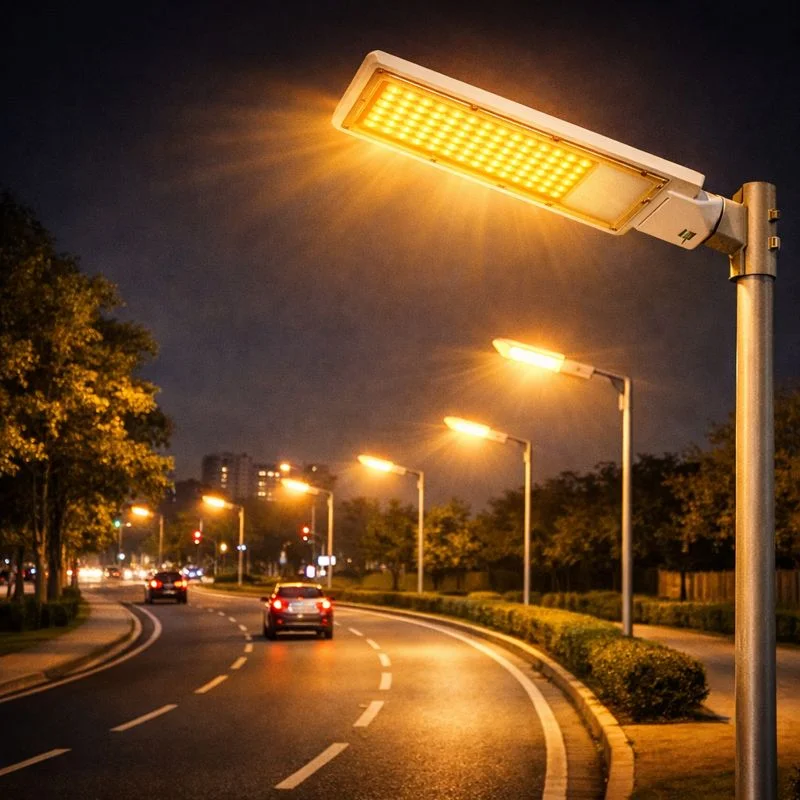
Smart cities rely on connected infrastructure, efficient public services, and technologies that help urban areas operate more sustainably. Among the essential components of this development is street lighting. Roads, pedestrian pathways, public parks, and commercial districts all require dependable illumination to support nighttime visibility and public safety. As cities modernize, traditional street lighting systems are increasingly being replaced with LED solutions that offer improved energy efficiency and greater control over lighting operations.
Behind this transition are manufacturers developing lighting products that can support modern infrastructure requirements. A professional LED Street Light Factory contributes to smart city development by producing efficient fixtures, integrating intelligent control compatibility, and adapting products to different urban environments. These manufacturing capabilities help municipalities and infrastructure developers build lighting networks that are more flexible, manageable, and suitable for future technological improvements.
1. Improving Urban Energy Efficiency
One of the major goals of smart city development is reducing unnecessary energy consumption. Street lighting can account for a significant portion of a municipality’s electricity use, particularly in cities with extensive road networks and public spaces.
LED technology helps address this challenge through efficient light production. Compared with many conventional lighting technologies, LED fixtures can provide suitable illumination while consuming less electricity.
Manufacturers support this transition by developing products with improved luminous efficacy, optimized optical systems, and effective thermal management.
For city planners, selecting efficient LED street lights can help:
- Reduce electricity consumption.
- Lower operating expenses.
- Decrease the energy demand of public infrastructure.
- Support municipal sustainability objectives.
- Improve the efficiency of large lighting networks.
Actual energy savings depend on the existing lighting system, product specifications, operating schedules, and control strategies.
2. Enabling Intelligent Street Lighting Systems
Smart street lighting goes beyond replacing traditional lamps with LED fixtures. It involves connecting lighting equipment to control systems that allow operators to monitor and adjust performance.
Modern street lights may be designed to support dimming drivers, sensors, communication modules, and remote management platforms.
Depending on the system, these technologies can provide functions such as scheduled switching, automatic brightness adjustment, remote fault reporting, and centralized control.
Manufacturers play an important role by designing fixtures that can accommodate compatible control components. They also need to consider electrical interfaces, communication requirements, and installation arrangements.
This flexibility allows cities to develop lighting networks that respond more effectively to operational needs.
3. Supporting Adaptive Lighting Through Sensors
Urban lighting requirements change throughout the day and night. A busy road may require stronger illumination during peak traffic periods, while a quiet street may need less light when activity decreases.
Adaptive lighting systems use sensors and programmed controls to adjust brightness according to selected conditions.
Examples include:
Motion detection: Sensors can identify movement in designated areas and trigger lighting adjustments where supported by the system.
Ambient light sensing: Photocells can detect surrounding light levels and help control automatic switching.
Traffic-responsive control: Compatible systems can adjust lighting schedules or brightness based on traffic conditions and predefined operating rules.
These technologies can help reduce unnecessary energy use while maintaining appropriate illumination. Their effectiveness depends on sensor placement, control settings, local lighting standards, and system reliability.
4. Improving Road Safety and Nighttime Visibility
Public safety is a central consideration in smart city planning. Roads, intersections, pedestrian crossings, and cycling routes need lighting that supports visibility for different road users.
LED street lights can be designed with specific optical distributions to illuminate target areas more effectively. Proper light distribution helps reduce dark spots, improve visual conditions, and limit excessive glare.
Manufacturers contribute through improvements in:
- Optical lens design.
- Light output and distribution.
- Color consistency.
- Glare management.
- Fixture positioning and mounting compatibility.
Municipalities should evaluate lighting layouts according to road classification, traffic conditions, and applicable illumination standards rather than relying on wattage alone.
5. Connecting Street Lighting With Urban Management Platforms
Connected street lighting can become part of a wider smart city infrastructure network.
With suitable communication technology, lighting systems may connect to centralized platforms that allow municipal operators to monitor multiple fixtures and manage their operation remotely.
Possible management functions include:
- Monitoring fixture operating status.
- Identifying reported equipment faults.
- Adjusting lighting schedules.
- Managing dimming levels.
- Reviewing energy consumption.
- Organizing maintenance activities.
Some connected lighting networks may also support additional urban applications through compatible infrastructure. However, these capabilities depend on the communication network, software platform, sensors, and equipment installed.
Manufacturers can support integration by providing fixtures with suitable control interfaces and clear technical documentation.
6. Supporting Solar-Powered Smart Street Lighting
Renewable energy is another important part of sustainable urban development. Solar-powered street lights combine photovoltaic panels, batteries, charge controllers, and LED fixtures to provide outdoor illumination.
These systems can be useful in locations where connecting to the electrical grid is difficult or expensive. Examples include parks, pathways, rural roads, and selected public infrastructure projects.
Modern solar street lighting may also incorporate intelligent controls that adjust brightness according to battery levels, operating schedules, or detected movement.
Factories support these applications by developing compatible LED fixtures and integrating product designs with the electrical and mechanical requirements of solar systems.
When selecting solar lighting, project planners should consider sunlight availability, battery capacity, autonomy requirements, local weather conditions, and expected operating hours.
7. Developing Durable Products for Different Urban Environments
Smart city infrastructure must operate across a wide range of environmental conditions. Street lights may be exposed to rain, dust, humidity, high temperatures, vibration, and pollution.
A manufacturer must consider these conditions during product design and material selection.
Important product characteristics include:
Weather protection: Appropriate enclosure construction and sealing help prevent dust and moisture from entering the fixture.
Thermal management: Effective heat dissipation supports stable operation of LED modules and electronic drivers.
Corrosion resistance: Suitable materials and surface treatments help protect fixtures in challenging outdoor environments.
Mechanical strength: Housing and mounting structures should be appropriate for expected installation and environmental conditions.
By producing fixtures designed for specific environments, manufacturers help cities build lighting networks that are better suited to local operating conditions.
8. Encouraging Sustainable Maintenance Practices
Maintenance is a major consideration for municipalities managing thousands of street lights. Traditional inspection methods may require workers to visit individual locations to identify faults or replace damaged equipment.
LED technology can help reduce maintenance frequency because many LED fixtures have longer expected operating lives than conventional alternatives. Connected systems can provide additional support through remote monitoring and fault notifications.
Depending on the installed platform, maintenance teams may be able to identify non-operational fixtures, prioritize repairs, and review equipment performance without relying entirely on manual inspections.
Manufacturers contribute by designing accessible products, providing replacement components, and supplying clear maintenance documentation.
A well-planned maintenance strategy helps extend infrastructure service life and reduce operational disruption.
9. Supporting Customization for Municipal Projects
Smart city projects rarely follow a single design template. Each municipality has different road layouts, environmental conditions, lighting standards, and infrastructure priorities.
For this reason, product flexibility is valuable when selecting street lighting equipment.
Manufacturers may offer different wattages, optical distributions, color temperatures, mounting arrangements, and control options. Some projects may also require customized housings, labels, or branding.
Before ordering, project developers should confirm that customized products meet the required technical specifications and applicable regulations.
Close coordination between manufacturers, lighting designers, contractors, and municipal authorities helps ensure that selected products are appropriate for the installation.
10. The Importance of Quality Control in Smart Lighting Products
Smart street lights contain more than basic lighting components. Depending on their design, they may include electronic drivers, communication interfaces, sensors, and control modules.
These additional components make quality assurance particularly important.
Manufacturers should evaluate electrical compatibility, thermal performance, optical output, enclosure protection, and the operation of integrated controls.
Testing may include:
- Electrical safety assessments.
- Photometric measurements.
- Thermal performance checks.
- Dust and water ingress testing.
- Communication and control-function verification.
- Aging or operational testing where applicable.
Buyers should request relevant technical documents and test reports for the exact models being considered. This helps confirm that the products are suitable for the intended smart city application.
11. Helping Cities Prepare for Future Technology
Smart city infrastructure is expected to evolve as communication systems, automation, and urban data platforms become more advanced.
Street lighting networks may eventually support a broader range of connected services, depending on the needs and investment priorities of each city.
Manufacturers can help prepare for these developments by designing modular products and supporting compatible control technologies.
Potential future improvements include:
- More advanced remote lighting management.
- Improved energy monitoring.
- Better integration with urban infrastructure platforms.
- More responsive adaptive lighting.
- Enhanced fault detection and maintenance reporting.
- Greater use of renewable energy systems.
Open communication standards and interoperability are especially important. Cities should avoid unnecessary dependence on incompatible systems that make future upgrades difficult.
12. Choosing the Right Manufacturing Partner for Smart City Projects
Selecting a suitable lighting manufacturer requires more than comparing product prices. Municipalities, contractors, and distributors should examine whether a supplier can meet the technical and operational requirements of connected infrastructure.
Important evaluation criteria include product quality, engineering capabilities, manufacturing capacity, relevant certifications, testing procedures, and after-sales support.
Buyers should also ask about dimming compatibility, communication interfaces, control-system integration, replacement parts, and warranty conditions.
Requesting samples and reviewing technical documentation can help identify potential issues before a large project begins.
A manufacturing partner with strong technical communication and consistent production processes can make project planning and long-term equipment management more predictable.
Conclusion
LED street light manufacturers are supporting smart city development by producing energy-efficient fixtures, enabling intelligent controls, improving optical performance, and adapting products to different urban environments. Their work contributes to more manageable lighting infrastructure and creates opportunities for cities to reduce energy consumption while improving nighttime visibility.
However, successful smart lighting projects depend on more than the fixtures themselves. Municipalities must also consider control platforms, communication networks, installation standards, maintenance strategies, and long-term compatibility.
As urban infrastructure becomes increasingly connected, manufacturers that combine reliable LED technology with flexible engineering and effective quality management will remain important partners in building efficient and adaptable smart cities.