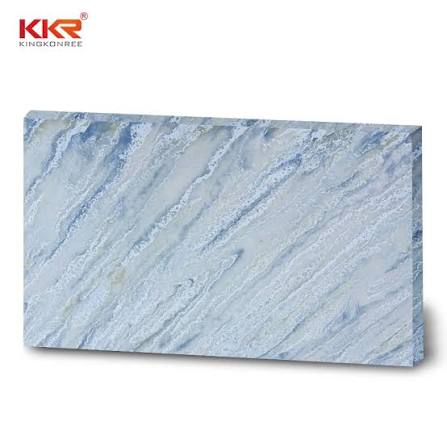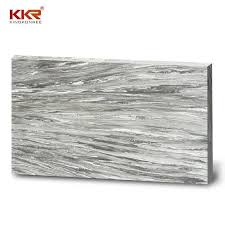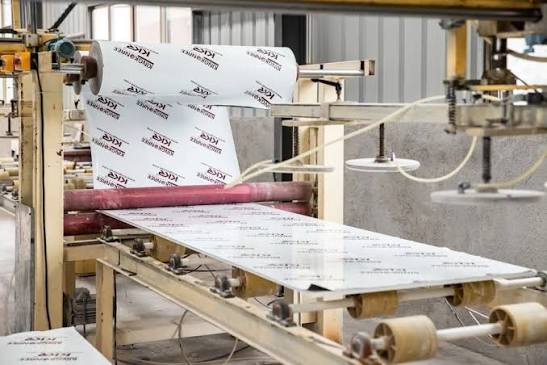
The solid surface industry serves a wide range of applications, including kitchen countertops, bathroom vanities, reception desks, wall panels, commercial furniture, and architectural features. As demand for customized and visually consistent materials grows, manufacturers must maintain reliable production processes while meeting different quality, design, and delivery requirements.
However, producing solid surface materials involves several technical and operational challenges. Variations in raw materials, curing conditions, color consistency, surface defects, production costs, and quality control can affect the final product. An experienced Solid Surface Manufacturer must address these issues through appropriate material selection, process monitoring, skilled production teams, and continuous improvement.
1. Maintaining Consistent Raw Material Quality
Raw material consistency is one of the most important factors in solid surface manufacturing. Products are commonly made using resin systems, mineral fillers, pigments, and other additives. Variations in these ingredients can influence the material’s appearance, workability, and physical characteristics.
Differences between raw material batches may result in inconsistent colors, uneven surfaces, or changes in product performance.
Solutions:
Manufacturers can reduce these risks by establishing supplier evaluation procedures and inspecting incoming materials before production. They should also maintain clear specifications for ingredient quality and storage conditions.
Regular supplier assessments, batch records, and material testing help identify variations before they affect finished products.
2. Controlling Color and Pattern Consistency
Color consistency is especially important for projects involving multiple sheets or customized components. Even small differences may become noticeable when surfaces are installed next to one another.
Factors such as pigment measurements, mixing conditions, raw material variations, and curing processes can influence the final appearance.
Solutions:
Manufacturers can improve consistency through controlled pigment measurement, standardized formulations, and documented production procedures.
They can also compare finished products with approved reference samples using suitable inspection methods. For large projects, producing materials from coordinated batches may help reduce visible differences.
3. Preventing Air Bubbles and Surface Defects
Air bubbles, pinholes, cracks, uneven textures, and other surface imperfections can reduce the appearance and usability of solid surface products.
Air may become trapped during mixing, pouring, or molding. Incorrect processing conditions and unsuitable material handling can also contribute to defects.
Solutions:
Manufacturers should establish suitable mixing and processing procedures based on the material formulation and production equipment.
Depending on the process, solutions may include controlled mixing speeds, vacuum degassing, appropriate mold preparation, and careful monitoring during curing.
Finished sheets should undergo visual inspections and relevant quality checks so that defective products can be identified before packaging.
4. Managing Resin and Mineral Filler Ratios
Solid surface formulations require carefully controlled proportions of resin, mineral fillers, pigments, and other additives. Incorrect measurements can affect processing behavior and the characteristics of the finished material.
For example, changes in filler content may influence workability, density, surface appearance, and mechanical properties.
Solutions:
Manufacturers should use accurate weighing and dosing equipment rather than relying on manual estimation.
Production teams can follow documented formulation instructions and maintain batch records for each production run. Periodic testing can help verify that the resulting material meets the required specifications.
5. Controlling Curing Conditions
Curing is an important stage in solid surface production because it influences how the material develops its final properties.
Inadequate or inconsistent curing conditions may contribute to uneven results, dimensional instability, or other product defects. The appropriate conditions depend on the resin system, formulation, and manufacturing method.
Solutions:
Manufacturers should establish controlled curing procedures based on validated production requirements.
Monitoring equipment can help track temperature and processing time. Regular calibration and maintenance of curing systems also reduce the possibility of process variations.
Production records make it easier to identify problems and trace them back to specific batches.
6. Reducing Cracking and Dimensional Instability
Cracks, warping, and dimensional variations can create difficulties during fabrication and installation. These issues may arise from inconsistent curing, material stress, unsuitable storage, handling damage, or incorrect fabrication practices.
Large sheets and customized components may require additional care because their dimensions and shapes can influence handling and transportation.
Solutions:
Manufacturers should review material formulations, curing procedures, cooling conditions, and storage arrangements to identify potential causes of instability.
Products should be stored and transported according to recommended handling guidelines. Dimensional inspections can also help identify sheets that do not meet the required tolerances.
For customized components, appropriate design allowances and support requirements should be considered before production.
7. Managing Complex Customization Requirements
Architects, interior designers, and project developers increasingly request customized colors, unusual dimensions, integrated basins, curved surfaces, and distinctive edge profiles.
Although customization creates more design opportunities, it can also increase production complexity. Special products may require additional testing, molds, equipment adjustments, and coordination between departments.
Solutions:
Manufacturers can establish a structured customization process that begins with a detailed review of the customer’s drawings and specifications.
The process should include technical feasibility checks, sample development, prototype approval where necessary, and confirmation of final production requirements.
Clear documentation helps ensure that design expectations are understood before manufacturing begins.
8. Handling Thermoforming and Complex Shapes
Some solid surface products, particularly suitable acrylic-based materials, can be heated and formed into curved or sculptural components.
However, producing these shapes requires careful control of material thickness, heating conditions, bending radius, and forming equipment. Incorrect techniques may cause cracking, uneven shaping, or surface damage.
Solutions:
Manufacturers should verify that the selected formulation is suitable for the intended forming process.
They can use appropriate molds, controlled heating systems, and trained operators to produce repeatable shapes. Prototype testing is particularly useful for complex designs because it allows potential problems to be identified before full production.
9. Maintaining Accurate Sheet Dimensions and Thickness
Dimensional accuracy is essential when solid surface sheets are used for countertops, vanity tops, wall panels, and other components that must fit specific installation spaces.
Variations in length, width, or thickness may increase fabrication time and create fitting problems.
Solutions:
Manufacturers should establish clear dimensional specifications and inspect products at suitable stages of production.
Calibrated measuring equipment, routine machine maintenance, and standardized cutting procedures can improve accuracy.
Inspection records should identify products that fall outside the agreed tolerances.
10. Controlling Production Waste
Manufacturing solid surface materials can generate waste from mixing, trimming, cutting, defective products, and customized production runs.
High waste levels increase material expenses and may create additional environmental management requirements.
Solutions:
Manufacturers can improve material efficiency through production planning and accurate quantity calculations.
Useful measures include:
- Optimizing sheet layouts and cutting plans
- Reducing unnecessary trimming
- Improving raw material measurement
- Monitoring defect rates
- Evaluating suitable recycling or reuse methods
- Training operators in material handling
Any recycling or reuse process should be assessed carefully to ensure that it does not compromise finished-product quality.
11. Balancing Product Quality and Manufacturing Costs
Manufacturers must manage expenses while maintaining the quality expected by customers. Raw material prices, energy consumption, labor, equipment maintenance, and transportation all influence production costs.
Reducing expenses without understanding their impact can lead to inconsistent products or higher defect rates.
Solutions:
A better approach is to identify unnecessary costs through production analysis rather than making uncontrolled reductions in material quality.
Manufacturers can review equipment efficiency, purchasing arrangements, production schedules, and waste levels. Preventive maintenance may also reduce unexpected equipment failures and costly production interruptions.
Cost improvements should be evaluated alongside product testing and customer requirements.
12. Maintaining Equipment Reliability
Solid surface manufacturing depends on equipment used for mixing, molding, curing, cutting, finishing, and inspection.
Equipment problems can interrupt production, reduce dimensional accuracy, or create inconsistent surface finishes.
Solutions:
Manufacturers should establish preventive maintenance schedules and inspect critical machinery regularly.
Important practices include:
- Cleaning equipment after production.
- Checking moving parts and mechanical components.
- Calibrating measurement and control systems.
- Replacing worn tools when necessary.
- Maintaining spare parts for essential equipment.
- Recording maintenance activities.
A planned maintenance system can reduce unexpected downtime and improve production reliability.
13. Developing Skilled Production Teams
Even advanced manufacturing equipment requires trained operators and technical personnel. Workers need to understand material handling, formulation controls, processing requirements, inspection procedures, and workplace safety.
Insufficient training may lead to measurement errors, equipment misuse, material waste, and inconsistent finishing.
Solutions:
Manufacturers should provide regular technical training and establish clear operating procedures.
Training can cover material properties, machine operation, defect identification, quality standards, and safe handling practices.
Experienced supervisors can also review production records and provide guidance when unusual problems occur.
14. Meeting Different Industry Requirements
Solid surface materials are used in residential, hospitality, retail, healthcare, and commercial environments. Each application may involve different expectations for appearance, maintenance, hygiene, and physical performance.
A product suitable for a residential vanity may not automatically meet the requirements of a specialized commercial or healthcare application.
Solutions:
Manufacturers should define the intended use of each product and communicate relevant technical limitations.
They can provide application-specific information, test reports, and maintenance recommendations. Buyers should also confirm whether the product meets any project-specific building, safety, or regulatory requirements.
15. Managing Quality Control Across Large Production Runs
Maintaining consistent quality becomes more challenging when manufacturers produce large quantities or operate multiple production lines.
A small process variation can affect many sheets before the problem is detected.
Solutions:
Manufacturers can use inspection checkpoints throughout the production process rather than relying only on final product checks.
A structured quality control system may include:
| Production stage | Quality control activity |
|---|---|
| Raw material receiving | Verify material specifications and condition |
| Formulation | Check ingredient measurements and batch records |
| Mixing | Monitor mixing procedures and consistency |
| Molding | Inspect preparation and material distribution |
| Curing | Monitor validated processing conditions |
| Finishing | Check surface appearance and dimensions |
| Final inspection | Verify product specifications before packaging |
Tracking inspection results helps identify recurring problems and supports corrective action.
16. Protecting Finished Products During Storage and Transportation
Solid surface sheets may become scratched, chipped, cracked, or otherwise damaged if they are not handled and packaged properly.
Transportation risks can be particularly important for international orders involving long distances and multiple handling stages.
Solutions:
Manufacturers should select packaging methods appropriate for product dimensions and transportation conditions.
Protective coverings, suitable pallets, edge guards, and secure loading arrangements can help reduce damage. Products should also be labeled clearly to support proper handling and storage.
Manufacturers and buyers should agree on inspection procedures and responsibilities for reporting transportation damage.
17. Meeting Delivery Deadlines and Managing Order Changes
Manufacturing schedules can be affected by raw material shortages, equipment breakdowns, customized production requirements, and unexpected changes in customer specifications.
Late deliveries may disrupt fabrication and installation schedules, especially on large construction projects.
Solutions:
Manufacturers should use realistic production planning and maintain clear communication with customers.
They can improve scheduling by monitoring material availability, assigning production capacity according to order priorities, and tracking progress at important stages.
Any changes to product dimensions, quantities, or finishes should be documented and reviewed for their impact on cost and delivery time.
18. Addressing Environmental and Regulatory Expectations
The solid surface industry must also consider environmental management, worker safety, chemical handling, and applicable product regulations.
Manufacturing operations may involve resins, additives, dust, energy use, and production waste. Poor management can create environmental and workplace risks.
Solutions:
Manufacturers should follow applicable environmental and occupational safety requirements.
Practical measures may include suitable ventilation, dust-control systems, safe chemical storage, protective equipment, waste management procedures, and employee training.
Where customers require environmental documentation, manufacturers should provide relevant and verifiable certificates or declarations rather than relying on unsupported sustainability claims.
19. Using Technology to Improve Production Efficiency
Modern manufacturing technology can help improve process monitoring, product consistency, and production planning.
Automation and digital systems may support accurate ingredient dosing, temperature monitoring, machine control, inventory management, and quality documentation.
However, technology must be selected according to actual production requirements.
Solutions:
Manufacturers can identify repetitive tasks and process stages where automation offers measurable benefits.
They should also train employees to operate new systems and maintain equipment properly. Production data can be analyzed to identify recurring defects, material losses, and inefficient processes.
Gradual improvements supported by measurable results are often more practical than introducing technology without a clear production objective.
20. Building Continuous Improvement into Manufacturing Operations
Manufacturing challenges rarely disappear permanently. Changes in raw materials, customer expectations, product designs, and production volumes can introduce new problems over time.
A continuous improvement approach helps manufacturers identify weaknesses and update their processes.
Useful activities include:
- Reviewing defect and rejection rates
- Analyzing customer complaints
- Monitoring production efficiency
- Evaluating supplier performance
- Updating employee training
- Reviewing maintenance records
- Testing improved formulations and processes
Manufacturers can use this information to establish corrective actions and measure whether improvements produce the expected results.
Conclusion
Solid surface manufacturing involves a combination of material science, production management, quality control, and technical expertise. Challenges such as raw material variation, color inconsistency, surface defects, curing problems, customization complexity, equipment reliability, and delivery delays can affect product quality and customer satisfaction.
Addressing these issues requires structured production procedures, accurate process monitoring, trained employees, preventive maintenance, and effective communication. Manufacturers that regularly evaluate their operations and invest in practical improvements can strengthen product consistency, reduce waste, and respond more effectively to changing project requirements. For buyers, understanding these challenges also makes it easier to evaluate a manufacturer’s production capabilities and determine whether its products and services are suitable for a particular application.