
Introduction
Alzheimer’s disease research increasingly relies on the combined investigation of multiple biological markers rather than examining individual proteins in isolation. Amyloid and tau are two major areas of interest because they are associated with distinct but interconnected processes involved in Alzheimer’s-related pathology. Measuring these biomarkers together can help researchers explore molecular patterns, compare experimental groups, and investigate how different biological changes relate to one another.
An effective ad biomarker panel brings together selected measurements to provide a broader view of the biological processes under investigation. Depending on the research objective, a panel may include amyloid-beta peptides, phosphorylated tau, total tau, and markers associated with neuronal injury. Selecting suitable biomarkers, compatible analytical methods, and appropriate quality-control procedures is essential for producing meaningful and reproducible research data.
Understanding Alzheimer’s Disease Biomarkers
Biomarkers are measurable biological characteristics that provide information about physiological or pathological processes. In Alzheimer’s disease research, biomarkers help scientists investigate changes associated with amyloid accumulation, tau pathology, and neuronal injury.
Different biomarkers reflect different aspects of disease-related biology. Their combined evaluation can provide more context than an individual measurement, although no single panel captures every aspect of the disease.
Three broad biomarker categories are particularly relevant:
- Amyloid-related biomarkers: Used to investigate amyloid-beta production, processing, and accumulation.
- Tau-related biomarkers: Used to study changes in tau phosphorylation and other tau-associated processes.
- Neurodegeneration-related biomarkers: Used to investigate neuronal injury and changes in nervous system structure or function.
Understanding what each marker represents helps researchers select a panel that aligns with the scientific question.
1. Amyloid Biomarkers: Investigating Amyloid-Related Changes
Amyloid-beta is a peptide produced through the processing of amyloid precursor protein. Different amyloid-beta forms are studied in Alzheimer’s disease research because their relative abundance and distribution can provide information about amyloid-related biological processes.
Amyloid-Beta 42
Amyloid-beta 42 (Aβ42) is a peptide containing 42 amino acids. It has a greater tendency to aggregate than shorter amyloid-beta forms and is an important subject of Alzheimer’s disease research.
Researchers may measure Aβ42 to investigate changes in amyloid biology and compare its concentration with other amyloid-related measurements.
Amyloid-Beta 40
Amyloid-beta 40 (Aβ40) is another commonly studied peptide. It is generally more abundant than Aβ42 in biological samples.
Evaluating Aβ40 alongside Aβ42 provides additional context for investigating amyloid-related changes.
The Aβ42/Aβ40 Ratio
The ratio of Aβ42 to Aβ40 is frequently examined in biomarker research. Because it considers the relative concentrations of two related peptides, it may provide information that differs from either measurement alone.
The interpretation of this ratio depends on the sample type, assay method, and analytical validation.
2. Tau Biomarkers: Exploring Tau-Related Pathology
Tau is a protein that helps stabilize microtubules and supports neuronal structure and intracellular transport. Changes in tau phosphorylation and distribution are important subjects in Alzheimer’s disease research.
Total Tau
Total tau assays measure tau forms recognized by the antibodies used in the analytical method. Researchers may investigate total tau when studying changes associated with neuronal injury or tau-related biology.
The exact molecular forms detected depend on the assay’s antibody design and validation.
Phosphorylated Tau 181
P-tau 181 refers to tau phosphorylated at threonine 181. It is widely investigated as a biomarker associated with Alzheimer’s-related biological changes.
Research involving p-tau 181 may include:
- Comparing phosphorylated tau levels across experimental groups
- Investigating relationships between tau and amyloid biomarkers
- Evaluating analytical differences between assay platforms
- Studying biomarker patterns in different sample types
- Exploring changes in tau-related measurements over time
Phosphorylated Tau 217
P-tau 217 is another important tau-related biomarker. It identifies tau phosphorylated at threonine 217 and is investigated in studies of Alzheimer’s-related pathology.
Comparing p-tau 181 and p-tau 217 can help researchers examine differences between phosphorylation sites and evaluate how individual markers perform within a broader biomarker strategy.
3. Neurodegeneration Biomarkers: Adding Biological Context
Amyloid and tau measurements can be complemented by biomarkers associated with neuronal injury and neurodegeneration.
Neurofilament Light Chain
Neurofilament light chain (NfL) is a structural protein found in neurons. Its levels in certain biological fluids are studied as an indicator associated with neuronal or axonal injury.
NfL is not specific to Alzheimer’s disease. It can be relevant to research involving multiple neurological conditions.
Neurogranin
Neurogranin is a protein associated with synaptic function. Researchers investigate it as a potential indicator of synaptic changes in neurodegenerative disease studies.
Glial Fibrillary Acidic Protein
Glial fibrillary acidic protein (GFAP) is associated with astrocytes, a type of glial cell in the central nervous system. It is studied in relation to astrocyte activation and neuroinflammatory processes.
Including these biomarkers may help researchers investigate biological processes beyond amyloid and tau alone.
Why Combine Amyloid and Tau Measurements?
Combining amyloid and tau measurements allows researchers to investigate different biological pathways within the same study.
Amyloid-related changes and tau pathology are connected to Alzheimer’s disease, but they do not represent identical processes. Measuring both can help scientists explore how these pathways relate to each other.
A Broader View of Biomarker Patterns
An individual biomarker provides information about a particular molecular target. A combined panel can reveal whether multiple markers show related or contrasting patterns.
For example, researchers may compare amyloid-beta ratios with phosphorylated tau measurements to investigate whether changes in amyloid-related biology are associated with changes in tau-related biomarkers.
Improved Research Stratification
Biomarker panels can help researchers classify experimental samples according to predefined molecular characteristics.
This may support studies comparing different biological profiles, provided that classification criteria are established and validated.
Longitudinal Investigation
Repeated biomarker measurements can help researchers examine how molecular patterns change over time.
Consistent sample handling and analytical performance are particularly important when comparing measurements collected at different study visits.
Evaluation of Experimental Hypotheses
Combining biomarkers may help researchers test hypotheses about interactions between amyloid accumulation, tau phosphorylation, and neuronal injury.
The findings can provide a more detailed basis for further experimental investigation.
Designing an Effective AD Biomarker Panel
A useful biomarker panel should be designed around the research question rather than simply including as many markers as possible.
Step 1: Define the Research Objective
Researchers should first identify the biological process or relationship they want to investigate.
Possible objectives include:
- Exploring amyloid-related changes
- Studying tau phosphorylation
- Comparing amyloid and tau measurements
- Investigating neurodegeneration-related markers
- Examining biomarker changes over time
The research objective determines which measurements are most relevant.
Step 2: Select Complementary Biomarkers
Biomarkers should provide distinct or complementary information.
A research panel might include Aβ42, Aβ40, p-tau 181, and total tau. Another study may include p-tau 217 or NfL, depending on its objectives.
Researchers should avoid assuming that every marker is necessary for every study.
Step 3: Consider Sample Type
Common sample types in Alzheimer’s biomarker research include:
- Plasma
- Serum
- Cerebrospinal fluid
Not every assay is validated for every sample type. Researchers should confirm sample compatibility and review matrix-specific analytical performance before combining measurements.
Step 4: Evaluate Analytical Compatibility
When multiple biomarkers are measured together, laboratories should assess whether the selected assays use compatible procedures.
Important considerations include sample volume, reagent requirements, calibration, detection technology, and potential interference between measurements.
Step 5: Establish Validation Requirements
Each biomarker assay should be evaluated for relevant analytical characteristics, including precision, sensitivity, specificity, measuring range, and potential matrix effects.
A panel should not be assumed to be analytically reliable simply because its individual components have been evaluated separately. Combined workflows may introduce additional compatibility and interference considerations.
Choosing Between Singleplex and Multiplex Assays
Biomarker panels can be measured using different analytical formats.
Singleplex Assays
Singleplex assays measure one target at a time.
Potential benefits include:
- Independent optimization of each biomarker measurement
- Straightforward assay-specific validation
- Flexibility to select different platforms for different targets
- Easier investigation of individual assay performance
However, measuring multiple biomarkers separately may require more sample volume, time, and laboratory resources.
Multiplex Assays
Multiplex assays are designed to measure multiple targets within a single analytical workflow.
Potential advantages include:
- Efficient use of sample material
- Reduced need for separate measurement procedures
- Simultaneous investigation of several biomarkers
- Potential improvements in experimental throughput
Multiplex methods also introduce additional considerations, such as cross-reactivity, target-specific sensitivity, reagent interactions, and differences in analytical performance between markers.
Researchers should validate each analyte within the multiplex configuration rather than assuming that performance is identical to a corresponding singleplex assay.
Analytical Technologies Used for AD Biomarker Panels
Different detection technologies can support amyloid and tau biomarker measurements. The most appropriate option depends on target concentration, sample characteristics, required throughput, and assay compatibility.
Enzyme-Linked Immunosorbent Assay
ELISA uses antibody recognition and enzyme-mediated signal generation.
It is widely used in laboratory research and can be adapted for different biomarker targets. Performance depends on antibody characteristics, washing procedures, incubation conditions, and signal measurement.
Chemiluminescence Immunoassay
Chemiluminescence immunoassays generate light through a chemical reaction associated with antibody-based target recognition.
A compatible analyzer measures the emitted signal and uses calibration information to estimate analyte concentration.
Depending on the platform, chemiluminescence systems may support automated processing and standardized measurement workflows. Researchers should confirm that the specific amyloid or tau reagents are compatible with the analyzer and validated for the intended sample type.
Electrochemiluminescence Immunoassay
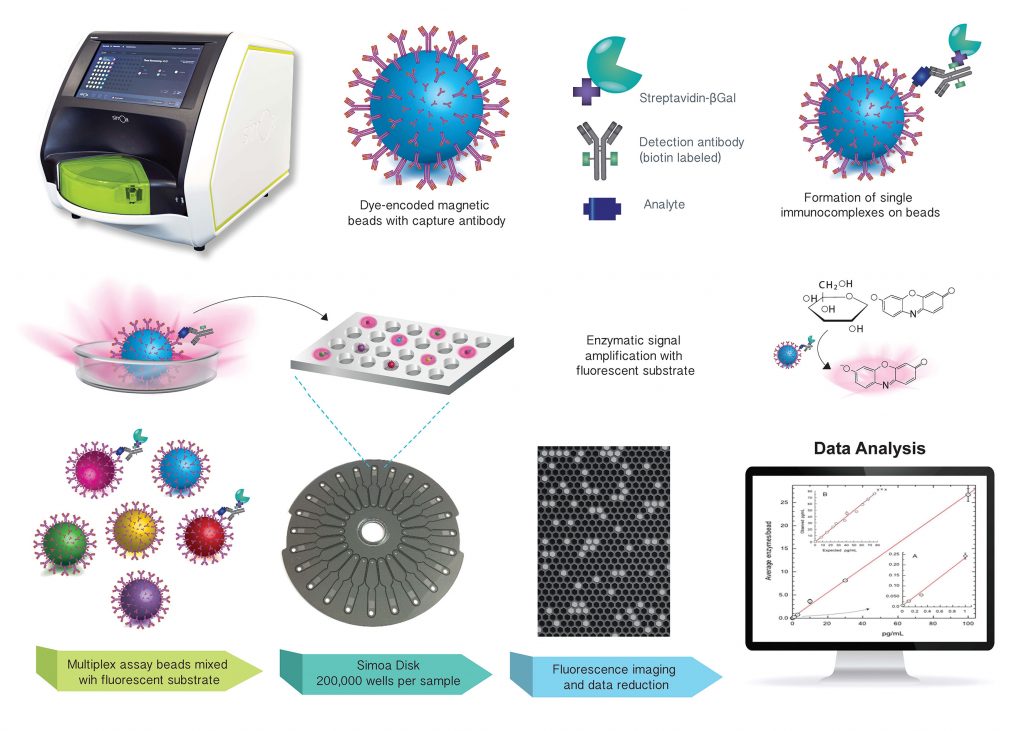
Electrochemiluminescence uses an electrochemical process to initiate light emission. Some platforms support multiplex analysis, making this approach relevant to studies that investigate several biomarkers.
As with other technologies, assay-specific validation is needed to establish performance for each target.
High-Sensitivity Immunoassays
Some biomarkers occur at low concentrations in particular sample types. High-sensitivity immunoassay approaches may help researchers investigate these targets.
The practical performance of a method should be assessed through its validated detection and quantification limits rather than relying only on general descriptions of sensitivity.
Calibration and Quality Control in Biomarker Panel Testing
Reliable panel measurements require appropriate calibration and quality-control procedures.
Calibration
Calibration establishes the relationship between the analytical signal and the concentration of a target biomarker.
Each assay may require its own calibrators and calibration model. Differences between platforms can affect the comparability of reported concentrations.
Precision Assessment
Precision describes the agreement between repeated measurements.
Researchers should evaluate within-run and between-run precision for each biomarker. In multiplex workflows, the precision of every target should be considered separately.
Accuracy and Bias
Where suitable reference materials or comparison methods are available, laboratories can investigate the agreement of measured values with accepted targets.
Potential bias should be considered when comparing results from different platforms.
Quality-Control Materials
Control samples should be included according to the laboratory’s established procedures. Monitoring control results over time can help identify changes in assay performance.
Reagent Lot Monitoring
Changes between reagent lots may influence signal generation or antibody recognition. Laboratories should follow established procedures for evaluating new lots.
Common Challenges in Combining Amyloid and Tau Measurements
Combining different biomarkers can provide valuable information, but it also introduces analytical and practical challenges.
| Challenge | Potential impact | Recommended approach |
|---|---|---|
| Different sample requirements | Inconsistent sample handling | Select compatible sample procedures |
| Variation in assay sensitivity | Unequal detection performance across targets | Evaluate each assay independently |
| Different calibration systems | Limited comparability of concentrations | Use appropriate assay-specific calibration |
| Matrix interference | Biased or inconsistent measurements | Validate performance in the intended matrix |
| Reagent cross-reactivity | Reduced analytical specificity | Review antibody and interference data |
| Limited sample volume | Difficulty completing all measurements | Prioritize targets and plan sample allocation |
| Reagent lot variation | Changes in analytical response | Monitor lot-to-lot performance |
| Different measuring ranges | Some results may fall outside validated limits | Review results against each assay’s range |
Planning for these challenges during panel development can help reduce avoidable variation.
Interpreting Combined Biomarker Results
The value of a biomarker panel depends on careful interpretation. Researchers should consider the biological role and analytical characteristics of each measurement.
For example, an investigation may examine:
- Whether Aβ42/Aβ40 measurements are associated with p-tau 181 concentrations
- Whether p-tau 181 and p-tau 217 show related patterns
- Whether total tau and NfL provide complementary information
- Whether biomarker relationships differ across experimental groups
- Whether measurements change during longitudinal observation
Statistical analysis should reflect the study design and account for relevant variables. Researchers should also consider missing data, assay variation, sample characteristics, and the limitations of each biomarker.
Importantly, a research biomarker panel is not automatically a clinically validated diagnostic tool. Clinical interpretation requires appropriate evidence, validated methods, and regulatory authorization for the intended purpose.
Applications of AD Biomarker Panels in Research
Alzheimer’s Disease Mechanism Studies
Combined amyloid and tau measurements can help researchers investigate relationships between molecular pathways associated with Alzheimer’s disease.
Biomarker Discovery
Researchers can evaluate candidate markers and explore whether they provide additional information when analyzed alongside established amyloid and tau measurements.
Clinical Research Support
In appropriately designed research studies, biomarker panels may support participant characterization, experimental comparisons, and investigation of biological changes.
Such research applications should not be confused with independent clinical diagnostic use.
Therapeutic Research
Biomarker measurements may help researchers investigate biological responses in experimental studies of potential therapeutic approaches.
The choice of markers should reflect the mechanism being studied and the specific research endpoints.
Method Comparison Studies
Laboratories can compare different analytical technologies to evaluate differences in sensitivity, precision, specificity, and measurement agreement.
Best Practices for Building a Reliable Biomarker Panel
A carefully designed panel requires both biological reasoning and analytical planning.
- Define the scientific objective before selecting biomarkers.
- Choose markers that provide complementary biological information.
- Confirm the intended sample matrix for every assay.
- Review antibody specificity and cross-reactivity.
- Evaluate sensitivity and measuring range for each target.
- Establish appropriate calibration procedures.
- Assess precision within and between analytical runs.
- Investigate potential interference in combined workflows.
- Use suitable quality-control materials.
- Document sample handling, reagent lots, and analytical conditions.
- Interpret measurements according to their biological and technical limitations.
- Avoid using research-only results as a substitute for validated clinical testing.
These practices support more consistent and interpretable biomarker research.
Future Directions in Amyloid and Tau Biomarker Research
Developments in analytical technologies and biomarker science may expand the possibilities for comprehensive Alzheimer’s disease research.
Improved Sensitivity
Advances in antibody design and detection technologies may help researchers investigate low-abundance biomarkers in selected sample types.
Multiplex Measurement
Further development of multiplex platforms may make it easier to study multiple biological pathways within a single workflow, provided that each analyte meets appropriate validation requirements.
Better Analytical Standardization
Improved reference materials, calibration practices, and reporting standards may strengthen comparisons between laboratories and studies.
Integration with Other Biological Data
Combining amyloid and tau measurements with genetic, imaging, and other molecular information may help researchers investigate Alzheimer’s-related biology from multiple perspectives.
Longitudinal Biomarker Studies
Consistent measurement procedures can support research into how biomarker patterns change over time and how those changes relate to other experimental findings.
Conclusion
Combining amyloid and tau measurements provides researchers with a broader approach to investigating Alzheimer’s disease biology. Amyloid-beta peptides, phosphorylated tau, total tau, and neurodegeneration-related markers each contribute different information, making thoughtful panel design essential.
A reliable AD biomarker panel requires clearly defined research objectives, suitable sample selection, compatible assay technologies, analytical validation, and ongoing quality control. By considering both biological relevance and measurement performance, laboratories can develop more informative and reproducible studies of amyloid-related changes, tau pathology, and neurodegeneration.