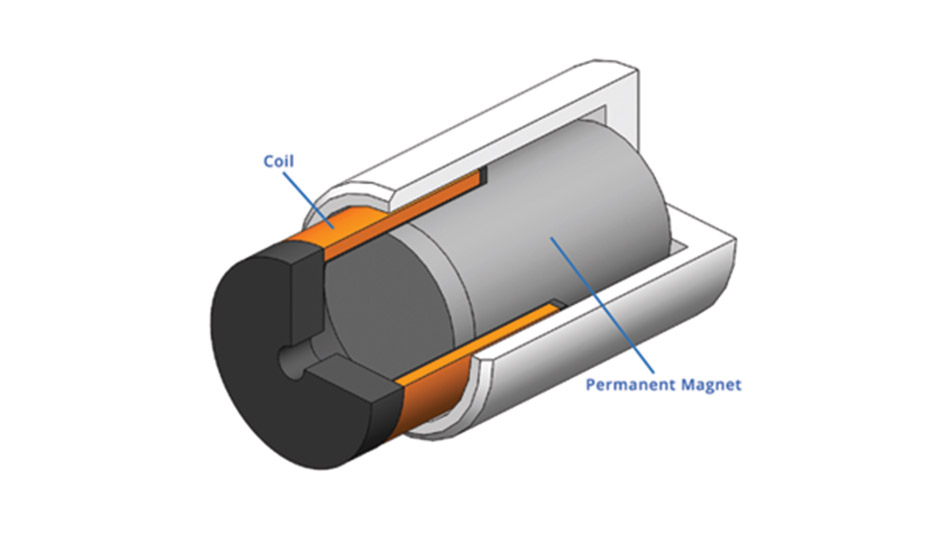
Voice coil linear actuators are widely used in automation and robotics systems that require precise, fast, and smooth linear motion. Their direct-drive electromagnetic design allows for highly accurate positioning and rapid response, making them suitable for modern industrial applications where performance and reliability are critical.
In engineering environments where accuracy cannot be compromised, a voice coil linear actuator is often selected for its ability to deliver backlash-free motion without mechanical transmission components. This eliminates common issues found in traditional systems such as gear wear, friction losses, and positioning delays, ensuring stable and repeatable performance in automated processes.
Key Factors to Consider When Selecting an Actuator
Choosing the right voice coil linear actuator depends on several performance and design parameters. Each factor plays an important role in ensuring the actuator meets application requirements in robotics and automation.
Important selection criteria include:
- Required force output and load conditions
- Stroke length and working travel range
- Speed and acceleration requirements
- Positioning accuracy and repeatability
- Duty cycle and thermal limitations
- Size and integration constraints
Understanding these parameters helps engineers match actuator capabilities with system demands.
Force Requirements in Automation Systems
Force is one of the most critical considerations when selecting a voice coil linear actuator. The actuator must generate sufficient force to move the load while maintaining control precision.
Since force is proportional to current, higher force requirements may demand stronger magnetic circuits and improved thermal management. However, increasing force must be balanced with energy efficiency and heat dissipation capabilities.
Stroke Length and Mechanical Constraints
Stroke length defines how far the actuator can travel in a linear direction. In robotics and automation, stroke requirements vary widely depending on application type.
Short-stroke actuators are typically used in:
- Micro-positioning systems
- Optical alignment equipment
- Precision inspection tools
Longer stroke versions are more suitable for:
- Pick-and-place robotic systems
- Automated assembly lines
- Material handling equipment
Selecting the correct stroke ensures optimal performance and avoids unnecessary system limitations.
Speed and Dynamic Performance
Speed is another important factor, especially in high-throughput automation systems. Voice coil linear actuators are known for their rapid response due to their low inertia and direct-drive design.
Key considerations include:
- Acceleration and deceleration capability
- Response time to control signals
- System vibration control during fast motion
- Controller bandwidth and feedback speed
High-speed applications require careful balancing of moving mass and force output to maintain stability.
Integration with Robotic Systems
In robotics, integration plays a major role in actuator selection. Voice coil linear actuators must be compatible with system architecture, including controllers, sensors, and mechanical mounts.
Common integration requirements include:
- Compatibility with closed-loop control systems
- Sensor integration for real-time feedback
- Compact design for space-constrained robotic modules
- Stable mounting for repeatable motion accuracy
Proper integration ensures smooth communication between the actuator and the robotic system.
Thermal and Duty Cycle Considerations
Thermal performance is essential in continuous operation environments. Since voice coil actuators generate heat during operation, duty cycle limitations must be considered during selection.
Important thermal factors include:
- Continuous vs. intermittent operation
- Heat dissipation efficiency
- Ambient temperature conditions
- Material selection for thermal stability
Ignoring thermal constraints can reduce performance and shorten actuator lifespan.
Applications in Automation and Robotics
Voice coil linear actuators are widely used in modern automation and robotics systems, including:
- High-speed pick-and-place robots
- Semiconductor manufacturing equipment
- Optical alignment and inspection systems
- Medical automation devices
- Precision testing and calibration systems
Their ability to deliver precise, repeatable motion makes them essential in these high-performance environments.
Conclusion
Selecting the right voice coil linear actuator for automation and robotics requires careful evaluation of force, stroke, speed, and thermal requirements. Their direct-drive electromagnetic design offers significant advantages in precision and responsiveness, making them a key component in modern automated systems. With proper selection and integration, these actuators provide reliable and efficient motion control across a wide range of industrial applications.