Distributed automation is often selected when machines and process equipment occupy separate areas of a facility. Rather than bringing every field cable to one central control cabinet, engineers can place signal modules near the devices they serve and connect those modules to a controller network. This arrangement can improve the organization of field wiring and make individual machine sections easier to configure. The hardware must still match the control system, communication protocol, and operating environment.
When reviewing Wago Remote Io solutions, it is important to identify the exact WAGO product family and its supported functions. WAGO offers automation and I/O products across different generations and application types, and their communication interfaces and module capabilities can vary. A sound evaluation compares the specific station with the project’s requirements instead of relying on a general product label.
How Distributed I/O Fits into a Control System
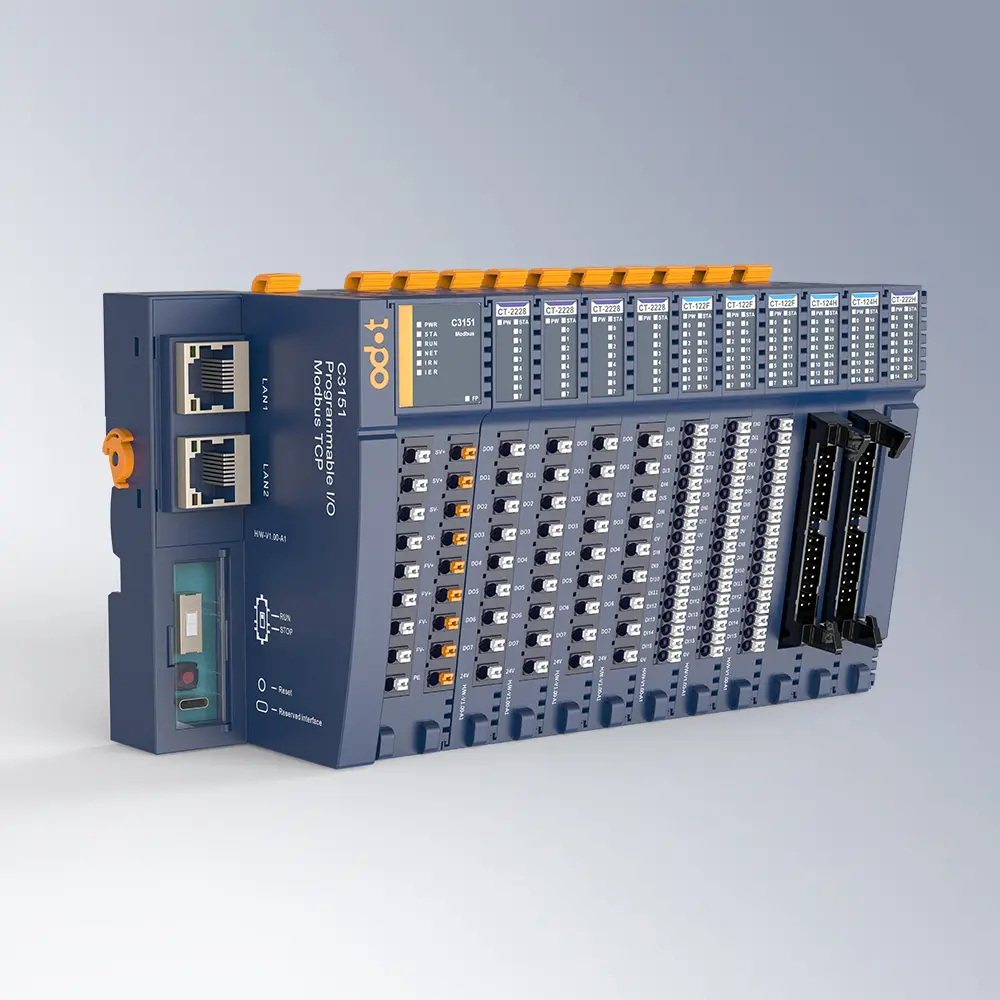
A remote I/O station provides local connections for field devices and exchanges their data with a controller. Digital inputs may monitor switches, sensors, and equipment contacts. Digital outputs can operate compatible relays, solenoids, or other loads. Analog modules collect continuous measurements or provide reference signals.
The communication interface links the station to the automation network. Depending on the selected hardware, this may involve an industrial Ethernet protocol or another supported field communication method.
The main controller often continues to execute the machine sequence and process logic. The distributed station handles the electrical interface to field signals and makes the data available through the network.
Reviewing the Available Module Types
The I/O schedule should determine which modules are needed. Digital channels are suitable for binary states, while analog channels support measurements such as pressure, temperature, flow, and level.
Some applications require dedicated temperature inputs, pulse measurement, counter functions, or other specialized interfaces. Engineers should confirm that the chosen product family supports these functions and that the required modules are available for the selected communication coupler.
Electrical specifications deserve careful attention. Check input voltage ranges, output current ratings, isolation, channel grouping, accuracy, and permitted wiring arrangements. An output module must be suitable for its load, and an analog input must match the signal provided by the instrument.
Communication and Controller Compatibility
A distributed I/O station is only useful when it can exchange data reliably with the controller. Confirm the exact protocol supported by the coupler and whether the target PLC can configure it through its engineering environment.
The integration review should include device description files, firmware versions, process-data mapping, network addressing, supported diagnostics, and any controller-specific limitations. If a gateway is needed to connect different protocols, assess its data capacity and the information it can transfer.
The network should be planned for the required number of stations and the expected data update rate. Cable distances, switch capabilities, topology, and possible redundancy requirements must also be considered.
Installation in Industrial Environments
The physical location of a remote I/O station affects its reliability. A station inside a protected electrical cabinet has different requirements from one mounted close to machinery or exposed to moisture, dust, or vibration.
Review the product’s operating temperature, enclosure protection, mounting arrangement, and electrical compatibility. Power supply capacity should account for the station electronics and connected field loads. Where output loads have significant inrush current, appropriate switching or protection arrangements may be required.
Good wiring practices remain essential. Signal cables should be routed appropriately, terminals clearly labeled, and grounding and shielding arranged according to the equipment instructions.
Engineering and Commissioning Considerations
Before installation, prepare a station layout showing the coupler, module order, channel assignments, network connection, and power distribution. During commissioning, verify that the configured station matches the installed hardware.
Each field signal should be tested from the physical device to the controller tag. Analog values should be checked against known inputs and correct engineering-unit scaling. Output testing should confirm both the control command and the connected load’s response.
Diagnostic messages should be reviewed and integrated into the plant’s alarm strategy. Maintenance personnel need clear instructions for replacing modules and restoring station configurations.
Long-Term Support and Expansion
Product availability, firmware support, spare-part strategy, and engineering software access should be included in the purchasing decision. A design with spare channels or space for additional modules may make future expansion easier, provided network and controller capacity are also available.
Conclusion
WAGO remote I/O solutions can be considered for distributed automation where local signal connections and network-based data exchange are beneficial. The right choice depends on the specific product family, module requirements, controller compatibility, and installation conditions. Reviewing these factors systematically helps ensure that the selected system can be commissioned, maintained, and expanded with confidence.