Factors to Consider When Buying Inflatable Sports Games for Commercial Use
Inflatable sports attractions have become a popular choice for businesses that provide entertainment at festivals, corporate events, school functions, family gatherings, and recreational venues. For rental companies and event organizers, purchasing the right equipment can create new revenue opportunities while expanding the range of activities offered to customers. However, commercial use involves more than choosing an attractive design. Buyers must evaluate durability, safety, operating costs, customer demand, and long-term maintenance before making an investment.
Selecting suitable Inflatable Sports Games requires a clear understanding of how the equipment will be used and who will participate. A rental business may prioritize portability and frequent setup, while an entertainment center may need durable attractions that accommodate repeated daily use. By comparing product specifications and considering the complete cost of ownership, businesses can make informed purchasing decisions and choose equipment that supports their commercial goals.
1. Identify Your Target Market and Business Needs
Before comparing products, define the customers you intend to serve. Your target market influences the type, size, design, and number of inflatables you should purchase.
Event Rental Businesses
Rental companies often serve different types of customers, including schools, event planners, families, community organizations, and corporate clients. A versatile selection of sports attractions can help meet varied requests.
Soccer challenges, basketball shooting games, and target competitions may suit smaller events, while larger obstacle courses can serve customers looking for more physically demanding entertainment. Consider whether each attraction can be transported, installed, and removed efficiently by your team.
Amusement and Recreation Centers
Permanent entertainment venues may operate their equipment regularly and need attractions that support frequent use. Durability, inspection requirements, ease of cleaning, and replacement-part availability are particularly important in this setting.
Buyers should also consider visitor capacity, the available installation area, and how each attraction fits into the venue’s existing activities.
Schools, Camps, and Corporate Events
Businesses serving schools and camps may need age-appropriate games that encourage participation and friendly competition. Corporate event organizers, meanwhile, may prefer team challenges that promote communication and group engagement.
Understanding these differences helps prevent purchasing equipment that looks appealing but does not match the expectations of the intended customers.
2. Evaluate Material Quality and Construction
Commercial inflatables may experience repeated inflation, deflation, transportation, and participant activity. Material quality and construction therefore deserve close attention.
Examine the Materials
Ask the manufacturer about the materials used in the inflatable, including their thickness, strength, coating, and intended application. Commercial suitability depends on the overall construction and design rather than material thickness alone.
Important factors include resistance to abrasion, ease of cleaning, flexibility, and suitability for the expected operating environment. If the equipment will be used outdoors, ask about its intended exposure to sunlight and other environmental conditions.
Inspect Seams and Reinforcement
Seams and reinforced areas can affect the product’s ability to withstand repeated use. Request information about seam construction, reinforcement around high-stress areas, and the quality-control procedures used during manufacturing.
Where possible, review detailed product photographs, inspection records, or sample materials before ordering. For large purchases, consider whether a sample or pre-shipment inspection is available.
Ask About Expected Service Life
No inflatable has a guaranteed service life under every operating condition. Actual durability depends on construction quality, frequency of use, participant behavior, weather exposure, maintenance, and storage.
Instead of relying on broad durability claims, ask suppliers how the product is designed for commercial use and what care procedures they recommend.
3. Check Safety Features and Compliance Requirements
Safety is a fundamental purchasing consideration for any business operating inflatable equipment. An attractive product is not a suitable investment if it cannot be installed and operated safely at the intended venue.
Review Applicable Standards
Ask the supplier which safety standards and regulations apply to the specific product and the market where it will be used. Request relevant documentation and verify that it covers the model being purchased.
Requirements may differ by country, equipment type, installation setting, and intended users. Do not assume that a general certificate automatically demonstrates compliance with every local requirement.
Evaluate Anchoring and Stability
Commercial inflatables need appropriate anchoring and installation arrangements. Ask about the approved anchoring points, required ground conditions, and installation procedures.
If the equipment will be used at different venues, confirm whether the anchoring system is suitable for the surfaces commonly encountered by your business. Additional approved arrangements may be necessary for certain locations.
Understand Participant Restrictions
Each attraction may have limits relating to participant age, height, weight, number of users, or permitted activities. These restrictions should be clearly documented and practical for your business to enforce.
Consider whether staff can supervise the attraction effectively and whether separate sessions are needed for different age groups.
Confirm Inspection Procedures
Ask the supplier for guidance on pre-use inspections, routine maintenance, and identifying damage. A clear inspection process helps operators recognize issues before they become more serious.
You should also establish procedures for stopping an attraction when damage, instability, or unsuitable operating conditions are identified.
4. Choose the Right Type of Inflatable Sports Game
The game format affects customer appeal, space requirements, staffing needs, and potential revenue. Selecting attractions that complement your target market can help create a more useful inventory.
Inflatable Soccer Games
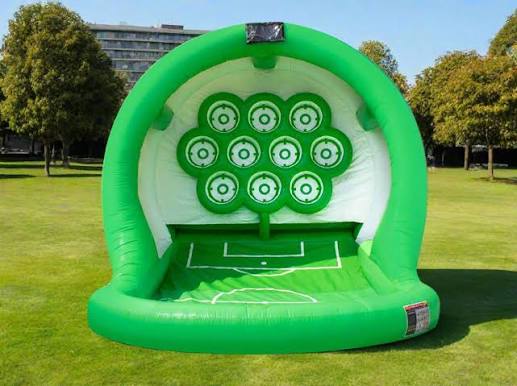
Soccer inflatables may include target goals, shooting challenges, or other football-inspired activities. They can be suitable for school events, sports festivals, corporate gatherings, and community celebrations.
When evaluating these products, consider how quickly participants can complete a round, how the scoring system works, and whether the game requires a large operating area.
Inflatable Basketball Games
Basketball shooting attractions offer a straightforward challenge that can appeal to different age groups when the design and operating rules are appropriate.
Check the hoop dimensions, ball requirements, recommended participant limits, and whether the game can be used indoors or outdoors. These details help determine whether the attraction fits your planned events.
Inflatable Obstacle Courses
Obstacle courses can attract customers seeking energetic, competitive activities. Depending on the design, participants may move through tunnels, climb designated sections, and navigate a series of challenges.
These attractions often require more installation space and careful supervision than simple target games. Assess the complete footprint, including entrances, exits, anchoring, queues, and required safety clearances.
Multi-Sport Inflatables
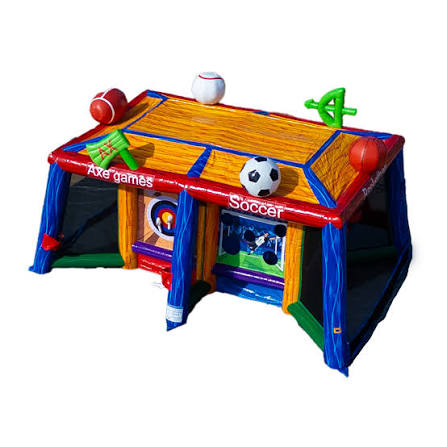
Multi-sport attractions combine several activities in one product or setup. They can provide variety for rental companies and venues that want to serve different customer preferences.
However, check which activities are actually included and whether they can operate simultaneously. A multi-sport design is only a practical advantage if it meets your space, staffing, and customer requirements.
5. Measure the Available Space and Portability
The size of an inflatable affects where it can be installed, how it is transported, and how efficiently your business can operate it.
Calculate the Complete Installation Footprint
Do not compare products using the inflatable’s main dimensions alone. Include the manufacturer’s specified clearance areas, anchoring arrangements, entrances, exits, blower positions, and queue space.
For indoor events, check ceiling height, access through doors, floor suitability, and electrical requirements. For outdoor installations, assess ground conditions, overhead obstructions, and weather-related operating limits.
A product that fits physically may still be unsuitable if it blocks pedestrian routes or leaves insufficient room for safe operation.
Consider Transport and Storage
If your business regularly delivers equipment to customer venues, transportation requirements can significantly affect operating costs.
Ask the manufacturer about packed dimensions, total weight, recommended carrying equipment, and the number of people required for handling. Confirm that your vehicle can accommodate the packed inflatable alongside blowers, accessories, and other necessary equipment.
Storage conditions also matter. The equipment should be stored according to the manufacturer’s instructions, with suitable protection from moisture, excessive heat, and potential damage.
Evaluate Setup Time
Frequent installation and removal can reduce the number of bookings a rental business can complete. Ask suppliers for realistic setup and takedown guidance and determine what training or tools are required.
Actual setup time will depend on the product, site conditions, anchoring method, and operator experience. If quick turnover is important, test the workflow before committing to a large purchase.
6. Compare Blower Requirements and Accessories
The inflatable structure is only one part of the operating system. Blowers, anchoring equipment, and other accessories are also important to the overall purchase.
Check Blower Specifications
Confirm the recommended blower type, electrical requirements, power consumption, and compatibility with the product. Ask whether the blower is included in the purchase price or must be ordered separately.
If you plan to operate the equipment at multiple venues, check whether the expected power supply is available at those locations. Any electrical arrangements should follow the manufacturer’s instructions and applicable safety requirements.
Review Included Accessories
Request a complete list of included items, such as carrying bags, repair materials, anchoring equipment, operating instructions, and other product-specific accessories.
Clarify which items are optional and whether any additional equipment is necessary for the intended installation.
Ask About Replacement Parts
Commercial use can create a need for repairs or replacement accessories over time. Find out whether compatible blowers, repair materials, and other required components are available and how they can be ordered.
Access to suitable parts may help reduce downtime when maintenance is necessary.
7. Assess Customization and Branding Options
Customized inflatables can help businesses create a distinctive appearance and offer products tailored to particular customers.
Custom Colors and Designs
Some manufacturers offer choices involving colors, graphics, game layouts, or branding elements. These options may be useful for rental businesses that want to differentiate their inventory or for venues that need equipment matching an established theme.
Before ordering a custom design, confirm the available options, minimum order quantities, production timeline, and any additional charges.
Logo Placement and Brand Visibility
Businesses may want to display their own logo or offer branded attractions for corporate customers. Ask where logos can be placed without interfering with safety instructions, visibility, or the equipment’s intended use.
Make sure you have permission to use any customer logos, trademarks, or licensed graphics included in the design.
Confirm the Final Specifications
Custom orders should include a written specification covering dimensions, materials, colors, graphics, included accessories, and approved operating requirements.
Review the final artwork and product details before authorizing production. Clear documentation can reduce misunderstandings and make it easier to evaluate the delivered equipment.
8. Compare Supplier Experience and Manufacturing Quality
A reliable supplier can be as important as the product itself, particularly when the equipment will be used for commercial activities.
Review Manufacturing Capabilities
Ask how the manufacturer handles material selection, construction, inspection, and product testing. Find out whether quality checks are performed during production and before shipment.
For large or customized orders, request relevant documentation and clarify how product specifications will be verified.
Evaluate Communication and Technical Support
Suppliers should be able to answer practical questions about installation, operation, maintenance, and product compatibility. Clear communication is especially valuable when your business depends on equipment being ready for scheduled events.
Before purchasing, ask how technical issues are handled and whether instructions or support are available in a format your staff can understand.
Request References or Product Evidence
Where practical, review previous commercial projects, customer references, product demonstrations, or detailed examples of comparable equipment.
Photographs and videos can help you understand a product’s appearance and operation, but they should not replace written specifications or appropriate safety documentation.
Confirm Delivery Terms
Ask for a written quotation that explains production time, shipping arrangements, packaging, delivery estimates, payment terms, and responsibility for any applicable import charges.
If the equipment is needed for a specific event date, allow sufficient time for production, transportation, inspection, and staff preparation.
9. Calculate the Total Cost of Ownership
The purchase price is only one part of the financial commitment. Commercial buyers should evaluate the costs of operating the attraction throughout its expected useful life.
| Cost category | What to consider |
|---|---|
| Purchase price | Base equipment cost and customization charges |
| Transportation | Shipping, delivery, and vehicle expenses |
| Installation | Setup labor, training, and necessary tools |
| Power | Electricity or other approved operating requirements |
| Maintenance | Cleaning, inspections, and routine care |
| Repairs | Repair materials, replacement parts, and service costs |
| Storage | Space, handling, and protection between uses |
| Insurance and compliance | Applicable coverage, inspections, and regulatory expenses |
For rental businesses, compare these expenses with realistic booking estimates and the amount customers are willing to pay. For permanent venues, consider how the attraction contributes to visitor satisfaction, activity capacity, and the overall recreational offering.
Avoid basing a purchase decision on optimistic utilization assumptions. Demand may change with seasons, weather, local competition, and event schedules.
10. Review Warranty, Repairs, and After-Sales Support
Commercial inflatables may require maintenance throughout their service life. A clear warranty and support arrangement can help buyers understand their responsibilities and available options.
Understand Warranty Coverage
Read the warranty carefully and confirm its duration, covered components, exclusions, and claim procedures. Ask whether coverage differs for materials, workmanship, blowers, and accessories.
Also clarify whether commercial use affects the warranty. Some products may have different conditions for professional rental operations or intensive use.
Confirm Repair Support
Ask whether the supplier provides repair guidance, replacement materials, or access to qualified service providers. Find out what information is required when reporting a problem and whether repairs must be performed by an approved technician.
Keep purchase documents, product specifications, maintenance records, and inspection logs in an organized location.
Establish a Maintenance Routine
Follow the manufacturer’s procedures for cleaning, drying, inspection, deflation, and storage. Schedule checks based on usage frequency and the supplier’s recommendations.
Staff should report damage promptly and avoid operating equipment that has not been cleared for use after a safety-related issue.
11. Common Mistakes to Avoid When Buying Commercial Inflatables
Even experienced buyers can overlook important factors when focusing primarily on price or appearance.
- Choosing based on price alone: A low initial price may not represent good value if maintenance, repairs, or operating expenses are higher.
- Ignoring space requirements: The full installation footprint includes more than the inflatable’s main dimensions.
- Overlooking safety documentation: Verify applicable requirements and request product-specific supporting documents.
- Underestimating transportation needs: Packed dimensions, equipment weight, and handling requirements affect delivery costs.
- Failing to check warranty conditions: Confirm that coverage applies to your intended commercial use.
- Buying too many similar attractions: A balanced inventory may serve more customer needs than several products offering the same experience.
- Ignoring staff training: Equipment must be operated according to its instructions, with appropriate supervision and established procedures.
- Relying on verbal promises: Put specifications, delivery terms, warranty conditions, and customization details in writing.
Avoiding these mistakes can make the purchasing process more systematic and reduce the risk of unexpected costs.
Conclusion
Buying inflatable sports games for commercial use requires careful evaluation of customer demand, material quality, safety requirements, game type, installation space, portability, and operating costs. Businesses should also investigate supplier reliability, customization options, warranty coverage, replacement-part availability, and after-sales support.
The best purchase is not necessarily the largest attraction or the least expensive option. It is the equipment that fits your business model, can be operated responsibly, and offers practical value over its expected service life.
By comparing complete product specifications and calculating the total cost of ownership, commercial buyers can build an inventory that serves their customers more effectively. Careful planning, regular maintenance, and appropriate staff training can then help support consistent operations and a positive experience for participants.