
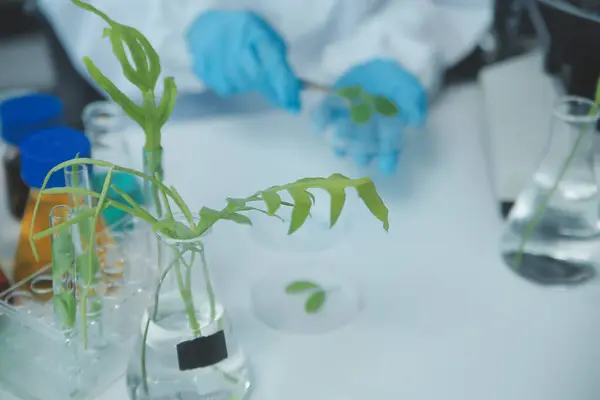
The global horticulture industry has undergone rapid modernization in recent years, driven by the need for high-yield, disease-free, and uniform planting material. Tissue culture technology has become a central solution for meeting these demands, especially in large-scale commercial agriculture. As production expands, understanding the structure and flow of the supply chain is essential for growers, distributors, and agribusiness companies.
Table of Contents
ToggleEfficient distribution systems ensure that laboratory-produced plants reach commercial farms in optimal condition. In this system, suppliers involved in Tissue Culture Plants Wholesale play a crucial role in bridging the gap between controlled laboratory environments and real-world agricultural applications, ensuring consistent supply and quality across global markets.
Understanding the Tissue Culture Supply Chain
The tissue culture supply chain is a multi-stage process that begins in the laboratory and ends at the commercial farm or nursery. Each stage is carefully controlled to maintain plant quality, genetic consistency, and survival rates.
The main stages include:
- Laboratory production and multiplication
- Root development and plantlet formation
- Acclimatization and hardening
- Packaging and logistics
- Wholesale distribution to buyers
This structured system ensures that plants are delivered in a healthy and transplant-ready condition.
Stage 1: Laboratory Propagation
The supply chain begins with the selection of elite mother plants that exhibit strong genetic traits, disease resistance, and high productivity. Small tissue samples are taken and grown in sterile laboratory conditions using nutrient-rich media.
This stage focuses on:
- Rapid multiplication of plant cells
- Maintenance of genetic uniformity
- Prevention of contamination
- Controlled environmental conditions
Laboratory propagation is the foundation of the entire supply chain, ensuring high-quality output from the beginning.
Stage 2: Multiplication and Root Development
Once initial cultures are established, they are multiplied repeatedly to increase production volume. Plantlets are then transferred to rooting media where they develop strong root systems necessary for survival outside the lab.
Key processes include:
- Repeated subculturing for mass production
- Monitoring of growth hormones and nutrients
- Formation of stable root structures
- Quality checks for plant health and uniformity
This stage determines the scalability of production for wholesale demand.
Stage 3: Acclimatization and Hardening
Acclimatization is one of the most critical stages in the supply chain. Plantlets grown in sterile environments must be gradually adapted to external conditions before they are shipped.
The hardening process involves:
- Gradual exposure to natural light and humidity
- Transition from laboratory media to soil or substrate
- Controlled greenhouse environments
- Monitoring of temperature and moisture levels
Proper acclimatization significantly increases survival rates after transplantation.
Stage 4: Packaging for Wholesale Distribution
After successful hardening, plants are prepared for bulk shipment. Packaging is designed to protect delicate plantlets during transport while maintaining moisture and preventing damage.
Common packaging practices include:
- Moisture-retaining materials to prevent dehydration
- Secure containers for physical protection
- Batch labeling for traceability
- Temperature-controlled packaging for long-distance shipping
This ensures plants remain viable during domestic and international transport.
Stage 5: Logistics and Transportation
Transportation plays a major role in maintaining plant quality. Depending on the destination, plants may be shipped via road, air, or sea freight.
Key logistical considerations include:
- Minimizing transit time to reduce stress
- Maintaining temperature and humidity stability
- Coordinating export documentation
- Ensuring compliance with phytosanitary regulations
Efficient logistics are essential for preserving plant health throughout the journey.
Stage 6: Wholesale Distribution to Buyers
At the final stage, plants are distributed to wholesalers, nurseries, and commercial growers. These buyers often use tissue culture plants for large-scale agricultural or horticultural projects.
Wholesale distribution involves:
- Bulk order fulfillment
- Quality inspection before delivery
- Coordination with local distributors
- Support for planting and acclimatization guidance
This stage connects production facilities directly to end-use agricultural operations.
Role of Intermediaries in the Supply Chain
Intermediaries such as wholesalers and distributors help streamline the flow of tissue culture plants from laboratories to farms. They manage logistics, storage, and sometimes additional acclimatization processes.
Their responsibilities include:
- Aggregating large orders from multiple buyers
- Ensuring quality control before resale
- Handling import/export documentation
- Coordinating regional distribution networks
These intermediaries make tissue culture plants accessible to a wider market.
Challenges in the Supply Chain
Despite its efficiency, the tissue culture supply chain faces several challenges. Because plants are living and sensitive organisms, they require careful handling at every stage.
Common challenges include:
- Sensitivity to temperature and humidity changes
- Risk of damage during long-distance transportation
- High dependency on skilled labor in laboratories
- Strict regulatory compliance across countries
Addressing these challenges requires advanced technology and well-coordinated logistics systems.
Future Trends in Supply Chain Development
The future of tissue culture supply chains is expected to become more efficient and technology-driven. Automation, digital tracking, and improved logistics systems are transforming how plants are produced and distributed globally.
Emerging trends include:
- Automated propagation systems in laboratories
- Real-time tracking of shipments
- Smart greenhouse acclimatization facilities
- Expansion of global trade networks for plant materials
These advancements will improve efficiency and reduce losses across the supply chain.
Conclusion
The tissue culture plant supply chain is a complex but highly organized system that connects laboratory production to large-scale agricultural use. Each stage—from propagation to wholesale distribution—plays a vital role in ensuring plant quality, uniformity, and survival.
As global agriculture continues to expand, efficient supply chain management will remain essential for meeting rising demand. A well-structured system ensures that high-quality planting material reaches growers worldwide, supporting productivity, sustainability, and long-term agricultural growth.