
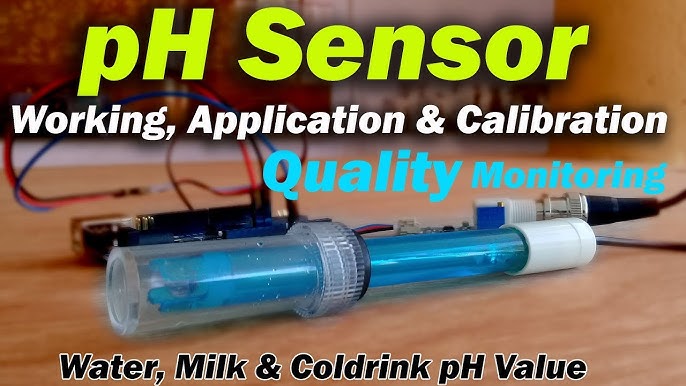
Monitoring water pH is a critical component of water quality management in industries, environmental monitoring, and laboratory applications. Understanding the differences between inline and portable water pH sensors is essential for selecting the right tool for specific monitoring needs. Each type offers distinct advantages, operational methods, and applications depending on the system and measurement requirements.
Understanding Inline Water pH Sensors
Inline water pH sensors are installed directly into piping systems or tanks, providing continuous, real-time monitoring of water acidity or alkalinity. These sensors are commonly used in industrial processes, municipal water systems, and wastewater treatment plants.
Inline sensors typically feature robust electrodes designed to withstand continuous exposure to water, chemicals, and temperature fluctuations. A water ph sensor installed inline can transmit data to control systems or automated dosing equipment, enabling immediate adjustments in chemical treatment, process control, or system management.
Advantages of Inline Sensors
The primary advantage of inline sensors is continuous monitoring. Real-time data allows operators to respond instantly to deviations, preventing equipment damage, process inefficiencies, or water quality issues. Inline sensors reduce the need for manual sampling and provide consistent measurements for long-term trend analysis.
In industries such as cooling towers, chemical manufacturing, and water treatment, inline sensors help maintain optimal pH levels for chemical reactions, prevent corrosion, and ensure compliance with regulatory standards.
Understanding Portable Water pH Sensors
Portable water pH sensors are handheld devices designed for flexibility and convenience. They are ideal for field testing, laboratory spot checks, or situations where continuous monitoring is not feasible. Portable sensors can be easily transported to multiple locations, allowing operators to measure pH at the source without relying on a centralized system.
Portable sensors generally combine a measuring electrode, reference electrode, and digital display in a compact unit. They provide accurate, real-time measurements and often include features such as temperature compensation, data logging, and wireless connectivity for modern applications.
Advantages of Portable Sensors
The key advantage of portable water pH sensors is versatility. They can be used in remote areas, on-site water sampling, aquaculture farms, environmental studies, and emergency situations. Portable sensors are perfect for applications where it is impractical to install permanent inline devices, or when multiple testing locations are required.
These sensors provide immediate feedback, enabling rapid decision-making for water treatment adjustments, pollution detection, or research sampling. Their portability ensures that operators can maintain water quality monitoring in areas without permanent infrastructure.
Key Differences Between Inline and Portable Sensors
| Feature | Inline Water pH Sensor | Portable Water pH Sensor |
|---|---|---|
| Installation | Permanent, within pipelines or tanks | Handheld, mobile use |
| Monitoring | Continuous, real-time | Spot measurements |
| Applications | Industrial processes, municipal water systems | Field testing, remote monitoring, lab spot checks |
| Data Integration | Can be linked to automated control systems | Manual recording or wireless data logging |
| Maintenance | Periodic cleaning and calibration | Regular calibration and proper storage |
| Flexibility | Limited, fixed location | High, can be used at multiple sites |
Choosing the Right Sensor
Selecting between inline and portable water pH sensors depends on the application requirements, monitoring frequency, and environmental conditions. Inline sensors are ideal for processes requiring continuous monitoring and automated control. Portable sensors are best for flexibility, field sampling, and situations where permanent installation is not possible.
In many cases, organizations use both types of sensors in tandem. Inline sensors provide continuous process data, while portable sensors are used for spot checks, validation, or testing in areas where inline sensors are not installed.
Conclusion
Understanding the differences between inline and portable water pH sensors is crucial for effective water quality management. Inline sensors offer continuous monitoring and integration with automated systems, making them ideal for industrial and municipal applications. Portable sensors provide flexibility, convenience, and immediate feedback for field testing, research, and spot checks. By choosing the right type of sensor and following proper calibration and maintenance practices, operators can ensure accurate, reliable pH measurements that support optimal water management and system efficiency.